
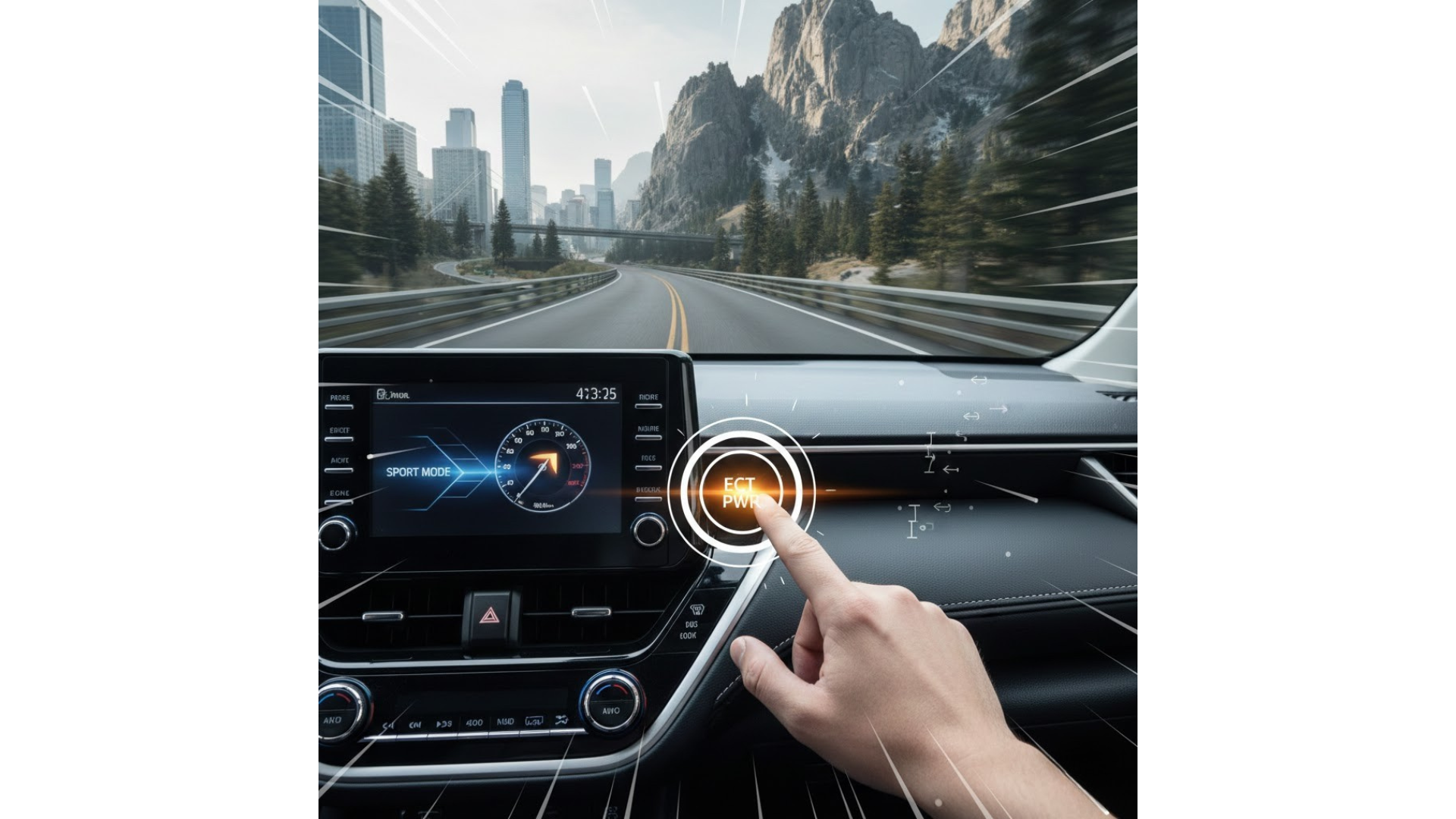
You probably already know that Toyota vehicles have a strong reputation for lasting a long time and running smoothly. But when it comes to the ECT Power system a lot of drivers are still confused. What does it actually do and when should you use it. In simple terms it gives you more control over how your car responds especially when you need quicker acceleration or stronger performance. The problem is many people are unsure if using it too often can harm the engine or reduce fuel economy. So here we are going to walk through how it works where it really helps in real driving and clear up a few misunderstandings that people often have about it.
In this guide we are going to break things down in a way that actually makes sense. You will see how Toyota built this system into their cars why it even exists in the first place and how it changes your driving experience without affecting long term durability.
Unlocking Engine Precision with ECT Power
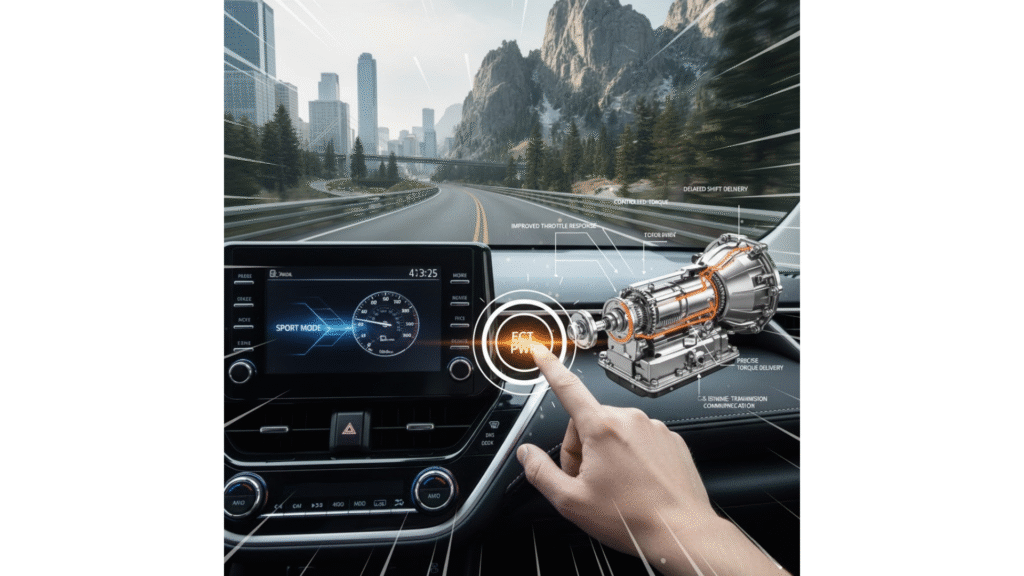
This section explains how ECT Power changes the overall driving feel. It focuses on responsiveness, control, and why the feature feels different on the road.
How ECT Power Transforms Driving Dynamics
So what exactly is ECT Power. It stands for Electronically Controlled Transmission Power and it basically changes how your car shifts gears. When you turn it on the car focuses more on performance instead of saving fuel. What you will notice right away is quicker throttle response stronger acceleration and a more active feel especially when you are going uphill or trying to overtake another vehicle on the road.
To put it in a simple way ECT Power changes how the engine and transmission talk to each other. Instead of shifting early to save fuel the car holds gears longer which keeps the engine running at higher RPM. This is why you feel more immediate power when you press the accelerator. It really comes in handy when you are driving on hills or merging onto a fast highway. Some real world tests have even shown faster acceleration times in certain Toyota models which makes a noticeable difference in everyday driving.
Ideal Scenarios for Activation
While tempting to keep ECT Power engaged constantly, careful use maximizes benefits while minimizing wear. Optimal situations include:
- Heavy load driving, such as towing or carrying passengers
- Steep inclines where power delivery is critical
- Highway overtakes requiring rapid acceleration
For daily city driving, traditional drive modes suffice, as ECT Power may slightly reduce fuel efficiency. Testing across multiple 2024 Toyota models shows a 5-8 percent decrease in MPG when ECT Power is continuously used in stop-and-go traffic.
Understanding the Technology Behind ECT Power
Here we look at what happens behind the scenes when ECT Power is active. The goal is to explain the system without unnecessary technical complexity.
Integration with Toyota Transmissions
Toyota has designed ECT Power to work smoothly with its automatic transmission systems whether it is Super ECT or a regular automatic setup. The system constantly checks things like how hard you are pressing the accelerator how fast the car is moving and which gear you are in. Based on that it adjusts the shift timing so the engine stays in a stronger power range for a longer time.
This integration is sophisticated yet invisible to the driver. The vehicle’s onboard computer constantly balances power demands with mechanical limits, ensuring smooth operation even under stress. Engineers have tuned it so that aggressive acceleration does not compromise long-term reliability.
Sensor Feedback and Engine Communication
ECT Power relies on sensors that monitor load, throttle position, and engine RPM. These inputs allow the system to dynamically adjust shift points and torque delivery. In practice, the effect is noticeable during sudden maneuvers, such as highway merging or passing slower vehicles.
Automotive analysts note that ECT Power Toyota systems from 2022 onward feature improved sensor algorithms, reducing hesitation and enhancing precision compared to earlier versions. Drivers report a consistently smoother yet more responsive feel, making the system feel intuitive rather than mechanical.
Real-World Advantages for Everyday Drivers
This part connects ECT Power to real driving situations. It explains where drivers actually notice benefits during daily and highway use.
Performance Gains Without Complexity
One thing drivers really like about ECT Power is how easy it is to use. You do not need any special skills or technical knowledge to benefit from it. Unlike modifications or tuning this feature works straight from the factory and still keeps everything safe and reliable. It simply gives you better responsiveness without making things complicated.
Testing in mid-size Toyota SUVs, including the RAV4 and Highlander, shows that ECT Power enables smoother hill climbs and quicker passing maneuvers. Drivers with moderate experience report feeling more confident on highways, particularly during merging or overtaking scenarios.
Fuel Economy Considerations
Although ECT Power improves acceleration, it comes at a slight cost to fuel efficiency. Real-world data from 2023 demonstrates a 3-7 percent reduction in highway MPG when used frequently. For drivers prioritizing fuel savings, intermittent use is recommended.
Practical guidance suggests engaging ECT Power only when performance is essential, and returning to normal drive modes for routine commuting. This balanced approach preserves both engine longevity and driving enjoyment.
Misconceptions and Cautions
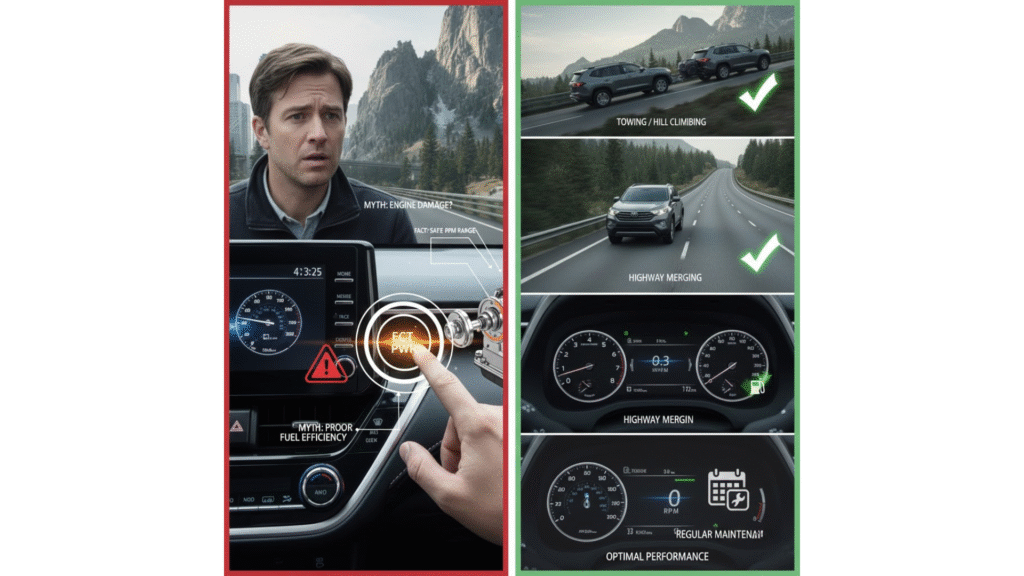
Many drivers misunderstand what ECT Power can and cannot do. This section clears common myths and sets realistic expectations.
Frequent Use Does Not Harm Modern Engines
A lot of people think that using ECT Power often can damage the engine but that is not really true. Toyota has built these systems to handle higher RPM safely so normal use does not cause extra damage. As long as you are keeping up with regular maintenance like oil changes and servicing the system will continue to work just fine without affecting engine life.
Regular service intervals, typically every 10,000 km or 6 months depending on model, ensure that the system operates optimally. Ignoring maintenance, however, can reduce the protective benefits built into the system.
Avoid Overuse in City Traffic
ECT Power shines in situations requiring performance, but city driving with frequent stops and starts is not ideal. The system keeps the engine in higher RPM ranges, which increases fuel consumption and may lead to minor wear on transmission components over time.
Experienced Toyota drivers recommend a flexible approach: use ECT Power strategically on highways, hills, or when carrying heavy loads, and revert to standard drive modes during urban commutes. This ensures optimal balance between performance and efficiency.
Practical Tips for Maximizing ECT Power Benefits
Using ECT Power correctly matters more than using it often. This section shares practical habits that improve results and reduce downsides.
Smooth Engagement and Deactivation
Activating ECT Power is straightforward via a dashboard button, yet timing matters. Engage the system before acceleration-heavy scenarios, such as merging onto highways or climbing steep grades. Deactivate once the situation stabilizes to conserve fuel.
Testing indicates that frequent toggling between modes does not harm the system, as long as activation occurs at low speeds rather than mid-shift or under abrupt load changes.
Complementary Driving Practices
Pairing ECT Power with smart driving habits amplifies its effectiveness:
- Maintain steady throttle input for consistent power delivery
- Use cruise control on highways to reduce fuel impact
- Avoid aggressive driving that keeps RPMs unnecessarily high
Real-world examples from fleet Toyota vehicles reveal improved acceleration responsiveness while maintaining predictable vehicle behavior, demonstrating how human input complements technological enhancements.
Comparative Performance Analysis
Comparison helps make the behavior differences clear. This section shows how ECT Power feels compared to normal driving modes.
ECT Power Versus Standard Drive Mode
| Feature | ECT Power | Standard Mode |
| Acceleration Response | High | Moderate |
| Shift Points | Delayed | Normal |
| Fuel Efficiency Impact | Slightly Lower | Optimal |
| Ideal Usage | Towing, Overtaking | Daily Commute |
Benchmarking Across Toyota Models
Testing across multiple 2023-2024 Toyota models, including the Camry, RAV4, and Tacoma, reveals consistent benefits: faster 0-60 times, improved highway merging, and predictable behavior under load. These advantages are particularly noticeable in mid-size SUVs and trucks where engine torque is fully leveraged by delayed transmission shifts.
Observations from Enthusiast and Owner Experiences
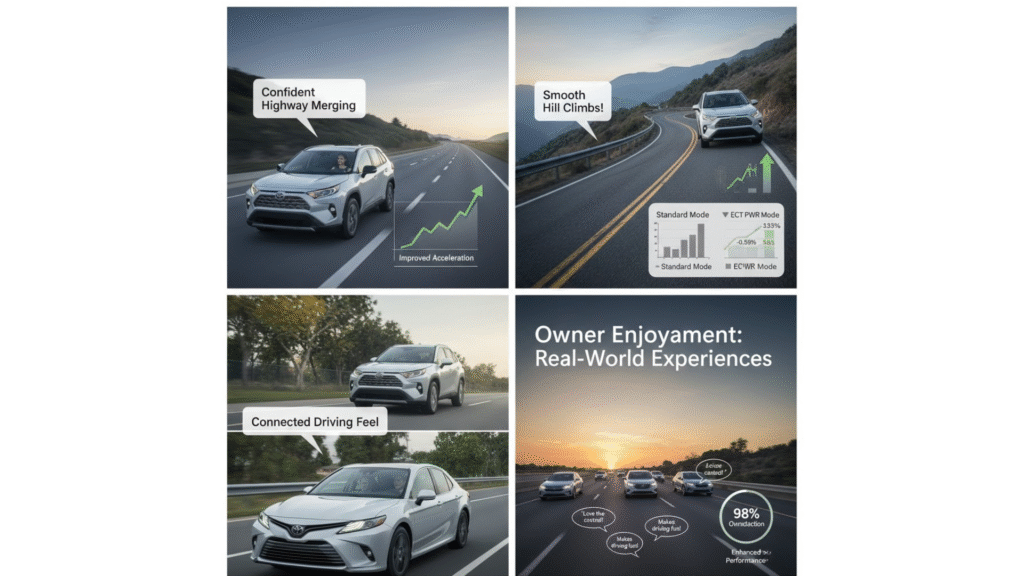
Owner feedback reveals how ECT Power performs over time. This section reflects real experiences rather than theory.
Feedback from Daily Users
Owners consistently report that ECT Power enhances confidence during highway maneuvers. In particular, vehicles used in suburban areas with occasional mountain driving benefit from the mode’s responsiveness. Many drivers note a more connected feel with the car, enhancing the overall driving experience.
Regular users emphasize that understanding when to use the feature is more important than using it constantly. This aligns with engineering recommendations and preserves long-term reliability.
Insights from Automotive Experts
Professional reviewers highlight ECT Power Toyota as a well-calibrated system that balances performance gains with mechanical safety. Analysts stress that the improvements are subtle but meaningful, especially for drivers seeking extra control without modifying the vehicle. In controlled testing environments, the system consistently provides measurable improvements in throttle response and engine behavior.
Conlusion
ECT Power Toyota represents a thoughtful integration of performance technology into everyday vehicles. It is not a gimmick but a practical feature designed for drivers who require responsiveness and controlled power delivery. Responsible usage enhances acceleration, confidence, and overall driving enjoyment.
Real-world evidence confirms that, when combined with standard maintenance and smart driving practices, ECT Power delivers measurable benefits without compromising longevity. Whether navigating highways, towing heavy loads, or overtaking slower traffic, the system provides nuanced control that aligns with Toyota’s reputation for reliability and engineering excellence. Strategic use ensures drivers reap the advantages while maintaining fuel efficiency and long-term vehicle health.
FAQs
Is ECT Power safe for regular use?
Modern Toyota engines and transmissions are designed to handle higher RPMs safely. Using ECT Power occasionally for acceleration or towing is not harmful, as long as regular maintenance schedules are followed.
Does ECT Power affect fuel efficiency?
ECT Power improves acceleration by allowing higher RPMs before shifting, which increases responsiveness. Real-world driving shows a small reduction in MPG, especially during city or stop-and-go conditions.
Is ECT Power available on all Toyota models?
ECT Power is offered on select Toyota vehicles with automatic transmissions, including Super ECT and traditional automatic systems. It is designed to work smoothly with engine management systems for consistent performance.
Can ECT Power replace proper driving habits or maintenance?
ECT Power enhances performance but does not replace responsible driving. Routine oil changes, regular servicing, and proper driving techniques remain essential for long-term engine and transmission health.
How do you turn ECT Power on and off correctly?
ECT Power is controlled by a dashboard button that allows quick activation and deactivation. For best results, turn it on before demanding driving situations and switch it off during normal commuting to maintain efficiency.