

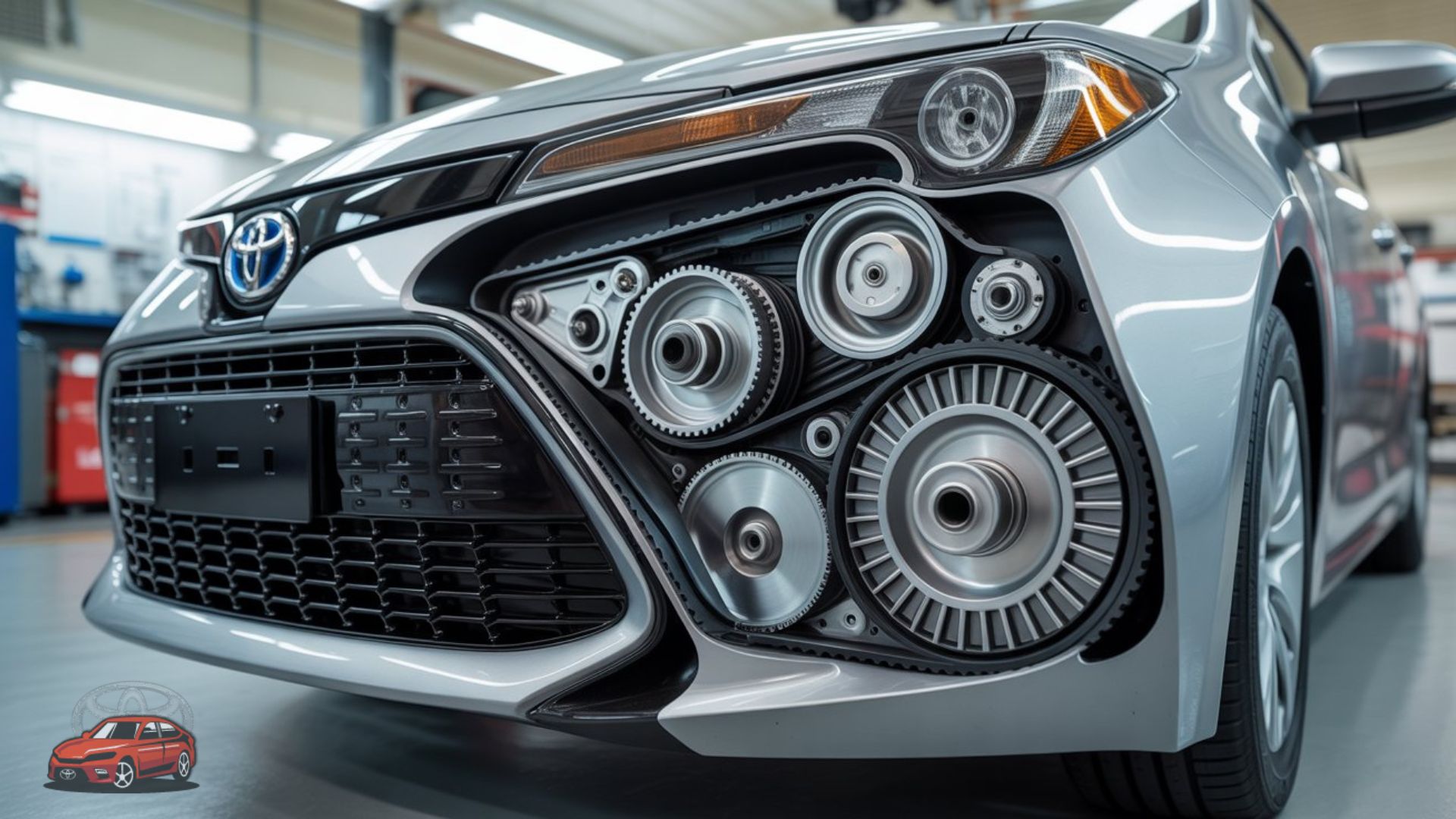
You will notice that the continuously variable transmission in the Toyota Corolla changes how the car actually feels on the road in daily use. Instead of using fixed gears like older systems this setup keeps adjusting itself as you drive so the engine stays in a comfortable and efficient range. What this really means for you is quieter driving better fuel savings and a smoother feel whether you are stuck in city traffic or cruising calmly on the highway.
Toyota brought this system into the Corolla mainly to make the car more reliable over time while also making everyday driving feel easier and more comfortable. When you combine it with modern electronic controls it manages power in a steady way improves how the car accelerates and gives you a smoother ride overall which works really well for daily commuting and normal driving needs.
What Is a Continuously Variable Transmission in Toyota Corolla?
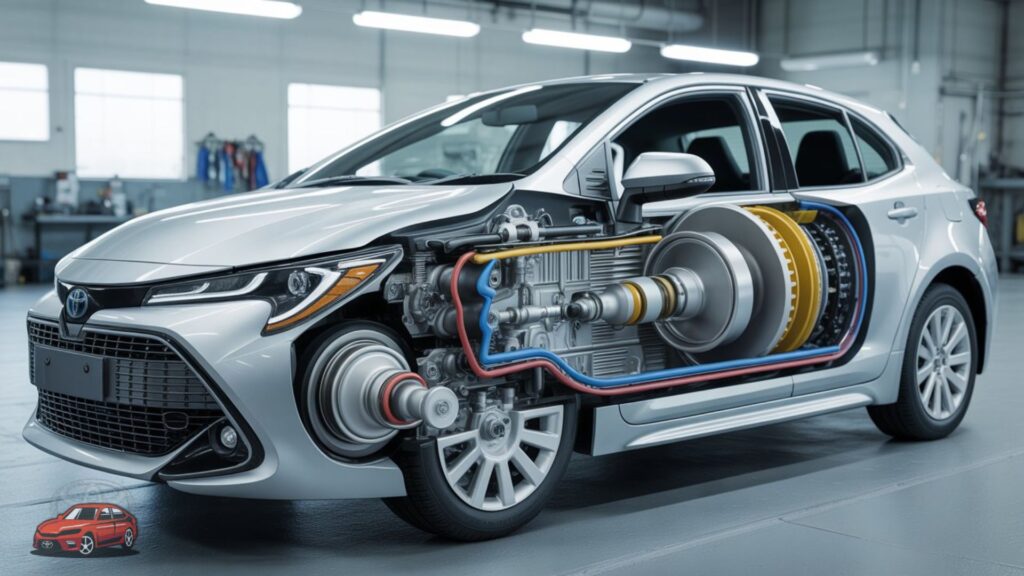
A continuously variable transmission works differently from what most drivers are used to because it does not rely on fixed gears at all. Instead of shifting step by step like a manual or automatic it keeps adjusting smoothly while you drive which creates a steady engine speed and makes the whole driving experience feel more controlled and comfortable. You will especially notice how smooth everything feels compared to older systems.
Toyota adopted CVT for Corolla to balance comfort, reliability, and fuel savings in modern vehicles. Compared to traditional gearboxes, this transmission system reduces mechanical shock during shifting and improves power delivery. Drivers notice fewer jerks and quieter operation, especially in traffic-heavy driving conditions.
How the Toyota Corolla CVT Works
If you really want to feel confident about using a CVT then it helps to understand how it actually works inside in simple terms. Once you get the basic idea of how the parts manage power and keep things smooth you will find it much easier to trust how the system behaves on the road.
Pulley and Belt System Explained Simply
At the heart of the CVT is a steel belt running between two variable pulleys. These pulleys change size using hydraulic pressure, allowing infinite gear ratio changes. This setup ensures seamless gear transitions, keeping engine power steady while adapting instantly to road demands.
Role of the Torque Converter
The torque converter connects the engine to the CVT smoothly during starts and low speeds. It replaces a clutch pedal found in manual cars and allows gentle engagement without stalling. This design improves driving comfort and protects the drivetrain from sudden load changes.
How CVT Keeps Engine at Optimal RPM
Electronic sensors constantly monitor throttle input, speed, and load. The system adjusts pulley positions through electronic control, holding the engine at its most efficient range. This approach supports efficiency optimization, stable power transfer, and reduced fuel waste during daily driving.
Evolution of CVT in Toyota Corolla Models
Toyota has refined Corolla CVT technology over time to address early limitations. Here, you will see how design and software changes improved performance and reliability.
Early Corolla CVT Generations
Early Corolla CVTs focused mainly on fuel savings, sometimes feeling sluggish under hard acceleration. These systems lacked advanced software tuning, which affected driver engagement. Still, they proved more efficient than older automatics in urban types of cars designed for commuting.
Modern Toyota K-Series CVT
Modern Corolla models use the Toyota K-series CVT, which introduced stronger belts and refined control logic. These upgrades improved acceleration, smoother automatic gear shifting, and better response at highway speeds. The result feels closer to conventional automatics while retaining CVT benefits.
Improvements in Reliability and Performance
Toyota strengthened internal components and improved cooling paths to enhance durability. Software updates now manage engine power more precisely, reducing stress on the mechanical connection. These changes significantly improved long-term performance and owner confidence.
Driving Experience With Corolla CVT
When you drive the Corolla in city traffic you will notice how calm and predictable it feels most of the time. The power builds up smoothly without sudden changes which helps reduce tiredness especially during stop and go situations. This kind of behavior makes daily commuting feel easier and suits drivers who prefer a relaxed driving style.
On highways, the CVT keeps engine noise low by maintaining steady RPM. Acceleration feels linear rather than aggressive, prioritizing comfort over sportiness. Some drivers notice reduced driver engagement, but most appreciate the refined feel and consistent vehicle control.
Fuel Efficiency Benefits of CVT in Corolla
One of the biggest advantages of a CVT is how it helps improve fuel efficiency in real driving conditions. Instead of jumping between gears it keeps adjusting smoothly so the engine stays in its most efficient range. This reduces wasted energy whether you are accelerating or just cruising which helps you save fuel over time.
In real-world use, Corolla CVT models often outperform older automatics in mixed driving. Owners report stable consumption figures even in traffic-heavy conditions. This consistent efficiency improvement makes the CVT appealing for cost-conscious drivers.
CVT vs Automatic Transmission in Toyota Corolla
Compared to a traditional automatic, the CVT prioritizes smoothness and efficiency over sporty feel. Automatics with fixed gears offer stronger engine braking and clearer shift points. However, CVT excels in comfort-focused Toyota vehicles.
Maintenance differs mainly in fluid care. CVT relies heavily on clean transmission fluid for proper operation, while automatics tolerate neglect slightly better. Over time, CVT ownership costs remain reasonable when serviced correctly, often matching or beating conventional automatics.
Reliability of Continuously Variable Transmission in Toyota Corolla
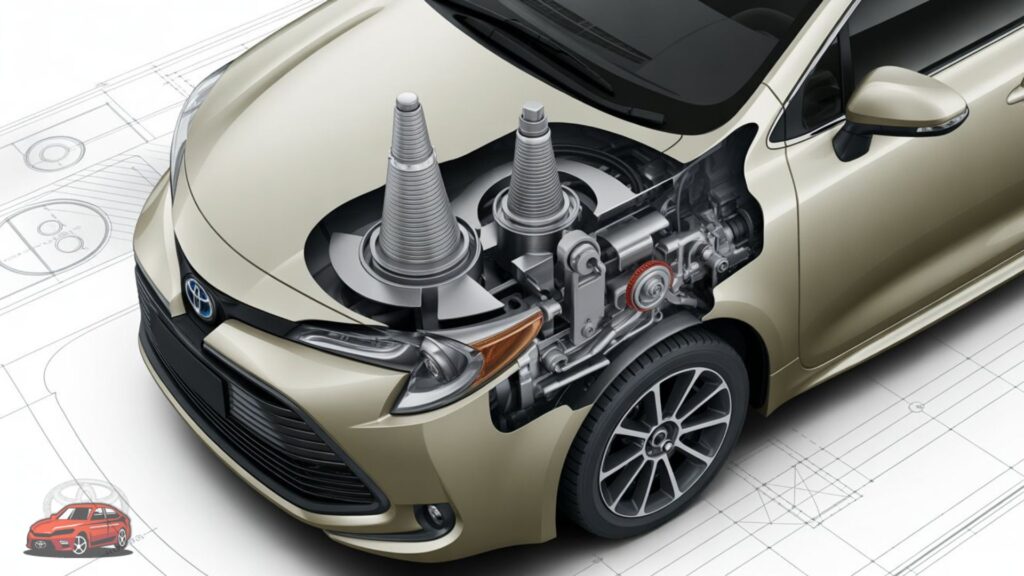
Toyota is known for building reliable transmission systems and the Corolla CVT follows that same approach. Instead of pushing the system too aggressively the design stays more balanced and uses proven components which helps maintain steady performance over a long period of time.
Many misconceptions suggest CVTs fail early, but real data shows otherwise. With proper maintenance, a Corolla CVT can exceed 200,000 kilometers. Gentle driving and timely service play a larger role than the technology itself.
Common Problems and Issues Reported in Corolla CVT
Some owners report hesitation during initial acceleration. This usually relates to software calibration rather than mechanical faults. Toyota addressed many of these issues through updates and improved control logic.
Occasional whining noise or overheating concerns appear when fluid degrades. Modern designs improved cooling and belt strength, reducing these risks. Regular checks ensure stable power delivery and protect internal components.
Maintenance Requirements for Toyota Corolla CVT
Taking care of your CVT plays a big role in how long it lasts and how well it performs over time. If you follow basic maintenance steps the system will stay in good condition and continue working smoothly.
CVT Fluid Change Interval
CVT fluid should typically be replaced between 40,000 and 60,000 kilometers, depending on usage. Fresh fluid maintains correct hydraulic pressure and protects internal surfaces, ensuring consistent performance.
Cost of Maintenance
Routine CVT service costs slightly more than basic automatic service but far less than major repairs. Preventive care preserves the gearbox and avoids expensive failures, supporting predictable ownership expenses.
Driving Habits That Extend CVT Life
Smooth acceleration, avoiding sudden full-throttle starts, and respecting warm-up time protect internal parts. These habits reduce strain on the transmission system and maintain reliable power transfer over time.
Is a CVT Toyota Corolla a Good Choice?
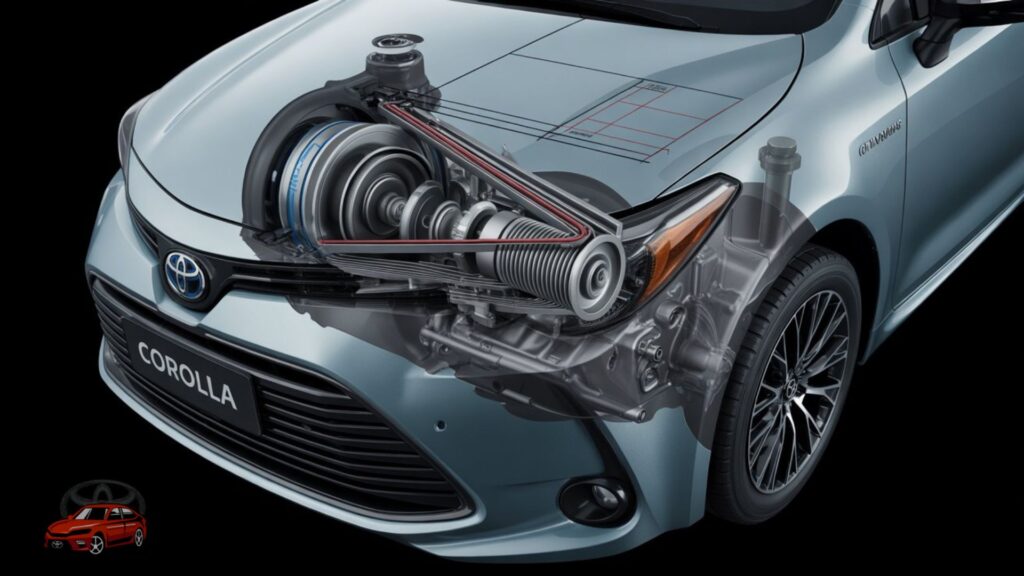
If you mainly drive in the city then the Corolla CVT can feel like a very practical choice because it focuses on comfort and fuel efficiency. It is easy to use and works well for everyday driving especially if you care more about saving money and having a smooth ride rather than quick aggressive performance.
Drivers seeking sporty feedback or frequent towing may prefer other options like dual-clutch transmission (DCT) or traditional automatics. For most everyday users, however, the CVT Corolla delivers balanced car performance with minimal compromise.
Conclusion
The continuously variable transmission in the Toyota Corolla shows how modern cars are designed with comfort and efficiency in mind. When you drive it regularly you will notice the smooth performance reliable behavior and good fuel savings especially if it is maintained properly. If you understand how it works and take care of it the system can last a long time and remain a dependable part of the car.
FAQs
Does the Toyota Corolla have CVT transmission problems?
Toyota Corolla CVT systems are generally reliable, but some owners report minor hesitation or noise. Most issues are linked to software calibration or delayed maintenance rather than serious mechanical failure.
What is Toyota continuously variable transmission?
Toyota continuously variable transmission is a system that uses pulleys and a steel belt instead of fixed gears. It allows smooth power delivery and improved fuel efficiency by keeping engine speed at optimal levels.
What year did the Corolla get CVT transmission?
Toyota began introducing CVT transmission in the Corolla lineup around the early 2010s. Widespread CVT use became standard in most global Corolla models from the mid-2010s onward.
Is a CVT transmission worth fixing?
A CVT transmission is often worth fixing if the issue is detected early, such as fluid-related or software problems. Major internal damage may change the cost-benefit decision depending on vehicle age.
How expensive is it to fix a CVT?
CVT repair costs vary widely based on the problem and region. Minor fixes are affordable, while full replacements can be expensive, which makes preventive maintenance especially important.