
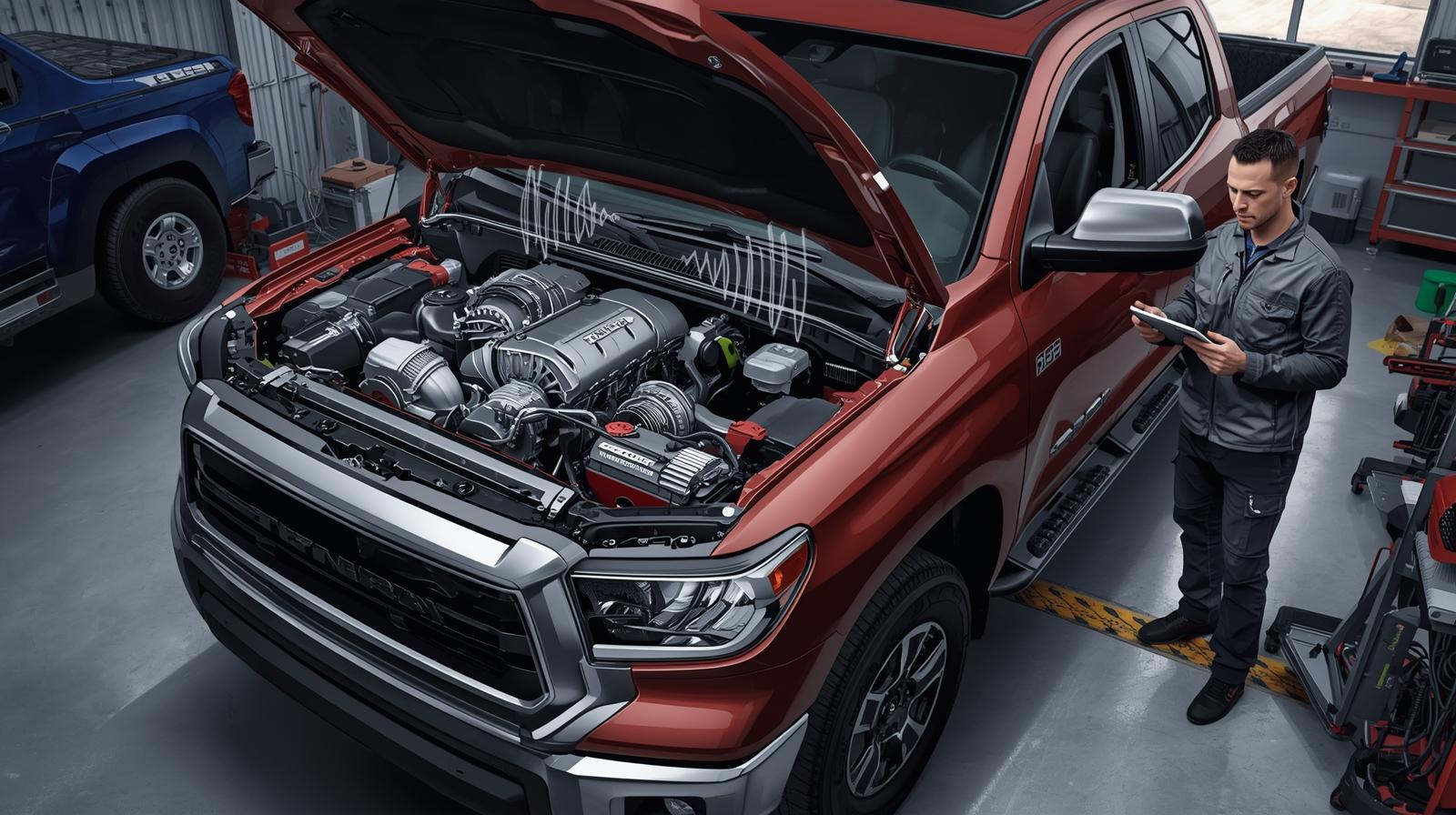
You know that moment when you press the accelerator and suddenly hear a sharp whining sound It can honestly make you a bit uneasy even if the truck feels perfectly fine otherwise The engine pulls strong and the shifting feels smooth but that high pitched noise shows up right when you give it throttle Most owners end up digging through forums and reading tons of different opinions and instead of clarity they just get more confused The real issue here is simple though this kind of whining is not one single problem it is usually a sign that different parts are reacting under load
Here is what is really going on that whining sound usually shows up when you accelerate because that is when the engine is under load As the load increases belts pull tighter pumps start working harder gears press against each other and bearings take on more pressure Parts that seem completely quiet when the truck is idling can suddenly make noise once they are pushed a bit harder
Why a Toyota Tundra Makes a Whining Noise Under Acceleration
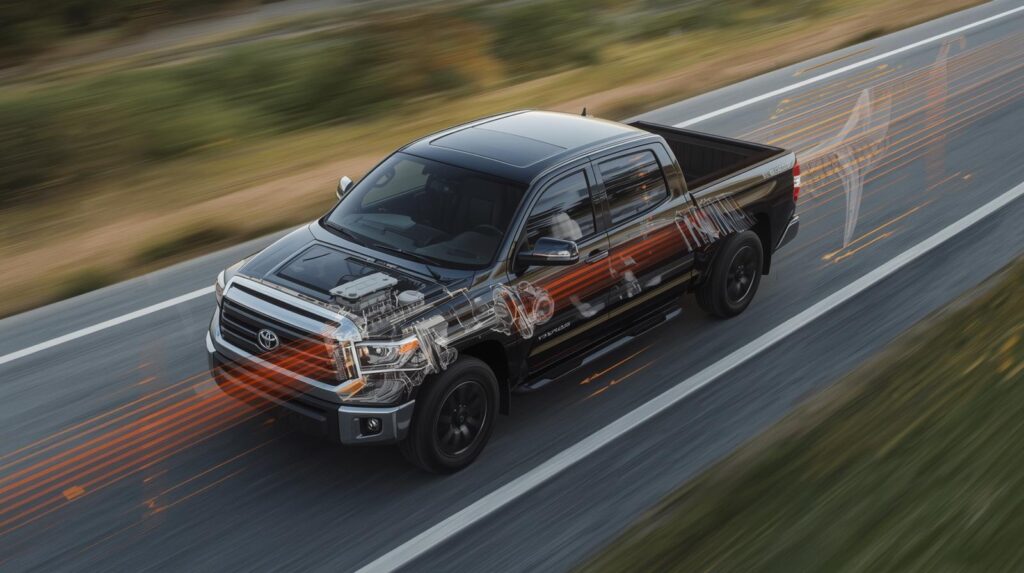
A whining noise usually appears during acceleration because acceleration creates load. When load increases, belts tighten, pumps work harder, gears mesh under pressure, and bearings carry more force. Components that sound quiet at idle often reveal wear only when stressed.
Forum answers are often misleading because many different parts can produce a similar sound. One person replaces an alternator and fixes the issue. Another replaces a differential months later for the same noise. Both experiences are real, but neither explains the pattern.
Now here is the tricky part sometimes that whining sound is nothing serious especially during a cold start or when you are barely pressing the throttle But in other cases it is actually an early warning sign of wear that can get worse pretty fast if you ignore it What really matters is not just the sound but how it changes and behaves over time
Understanding Whining Noises: How Acceleration Changes Sound Behavior
Not all whining sounds behave the same way, and acceleration makes those differences easier to notice. This section explains how load, RPM, and mechanical stress shape the sound you hear.
Why Load and RPM Matter
Engine RPM and vehicle speed are not the same thing. RPM increases whenever the engine spins faster. Load increases when the engine works harder to move weight. Acceleration increases both at the same time.
Belts grip tighter, pumps push thicker fluid, bearings carry extra force, and gear teeth press harder together. A component that barely complains at idle can sing loudly once load arrives. That is why a noise that only appears when accelerating is so important.
Whining vs Whistling vs Grinding (Sound Identification)
A true whine is smooth, steady, and rises in pitch with RPM. A whistle often comes from air movement and usually changes abruptly with throttle position. Grinding is rough, uneven, and often tied to speed rather than RPM.
Pitch matters. A high, clean whine often points toward rotating accessories or pumps. A deeper whine that changes with throttle input often points toward gears or bearings under load.
Most Common Causes of Whining Noise When Accelerating
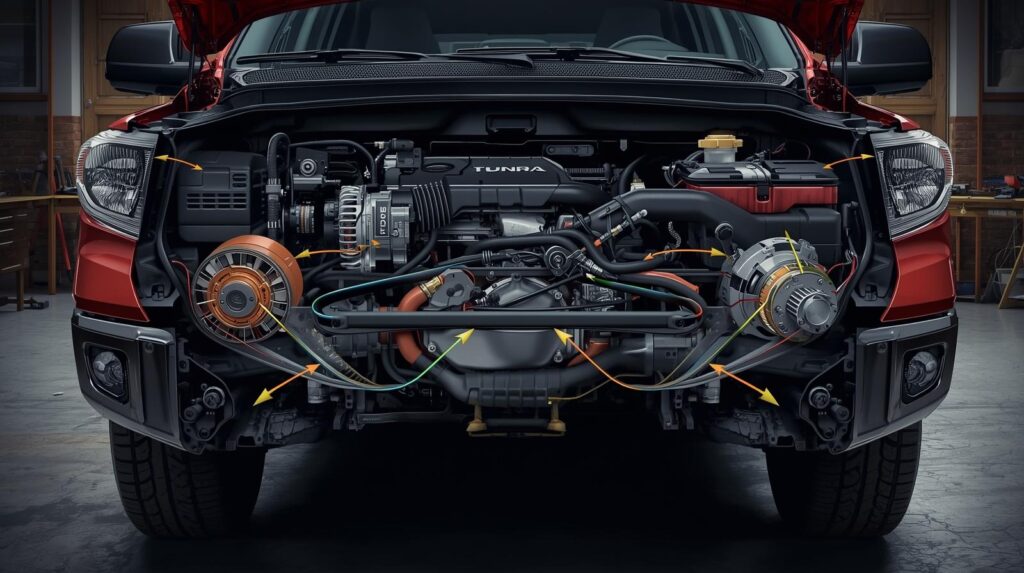
Several systems can produce a whining noise, but some are far more common than others. The causes below are ranked to reduce guesswork and help you focus on the most likely sources first.
Serpentine Belt and Belt Tensioner Problems
Belt slip is one of the most common and most overlooked causes. When throttle is applied, accessories demand more torque. A worn or glazed belt slips microscopically and produces a high-pitched whine instead of a squeal.
Cold starts make this worse because rubber stiffens and grip decreases. Many owners notice the noise fades after a few minutes of driving, which points directly to belt or tensioner wear.
Alternator Whining Under Load
The alternator works harder during acceleration because electrical demand rises and engine speed increases. Worn alternator bearings often whine only under load, not at idle.
A key clue is noise that changes with electrical demand. Turning on headlights or climate control may slightly change the sound. That behavior strongly suggests alternator involvement.
Power Steering Pump Whine
Power steering pumps can whine even when the wheel is straight. Acceleration raises engine RPM, which raises pump speed. Low fluid, air in the system, or internal wear can all produce a rising whine.
Many drivers assume steering noise only happens while turning. That assumption leads to misdiagnosis. A worn pump often announces itself during straight-line acceleration.
Differential Whine (Front or Rear)
Differential whine is load-sensitive. When throttle is applied, gear teeth press together differently than when coasting. Worn gears or bearings often whine under acceleration and quiet down when the throttle is released. Ignoring this noise is risky. Differential wear rarely stays stable. Once the sound appears, damage usually progresses.
Transmission-Related Whining (Automatic and Manual)
Automatic transmissions can whine from pump or torque converter wear. Manual transmissions may whine from input shaft bearings. The key difference is whether the sound changes with gear selection or with RPM alone. A noise that follows RPM regardless of gear often points away from the transmission itself and toward accessories.
Wheel Bearing Noise That Mimics Acceleration Whine
Some wheel bearings produce a whine rather than a growl. Load shifts during acceleration can increase the sound. Turning the wheel slightly at speed can help isolate this cause because the noise often changes when weight shifts from one side to the other.
Intake or Vacuum-Related Whining
Intake leaks can whistle or whine under throttle. These sounds are air-based, not mechanical. They often change sharply with throttle position and may disappear instantly when the throttle is released. Air resonance can trick even experienced owners into chasing mechanical repairs that are not needed.
Diagnostic Guide: How to Identify the Exact Source of the Whining Noise
Correct diagnosis matters more than replacing parts. This section walks through simple checks that help narrow the cause before any repair decisions are made.
Step-by-Step At-Home Diagnosis Checklist
Start simple. Rev the engine while parked. If the noise appears without moving, drivetrain components are less likely. Compare neutral and drive. If the sound appears only in drive, load is the trigger. Test cold and warm. A noise that fades as fluids warm often points toward belts, pumps, or fluid condition.
Acceleration vs Coasting Test
Accelerate gently, then release the throttle while maintaining speed. If the noise disappears instantly when coasting, the issue is load-related. If it continues unchanged, speed-related components such as wheel bearings move higher on the suspect list.
Steering Input Test
While accelerating lightly, turn the steering wheel slightly left and right. A change in noise often points toward wheel bearings or power steering components.
Location-Based Sound Clues
Noise from the front engine bay usually involves accessories or intake. Noise from beneath the vehicle often points toward drivetrain components. Left or right bias matters more than most owners realize.
Normal vs Abnormal Whining Noises in Toyota Tundra
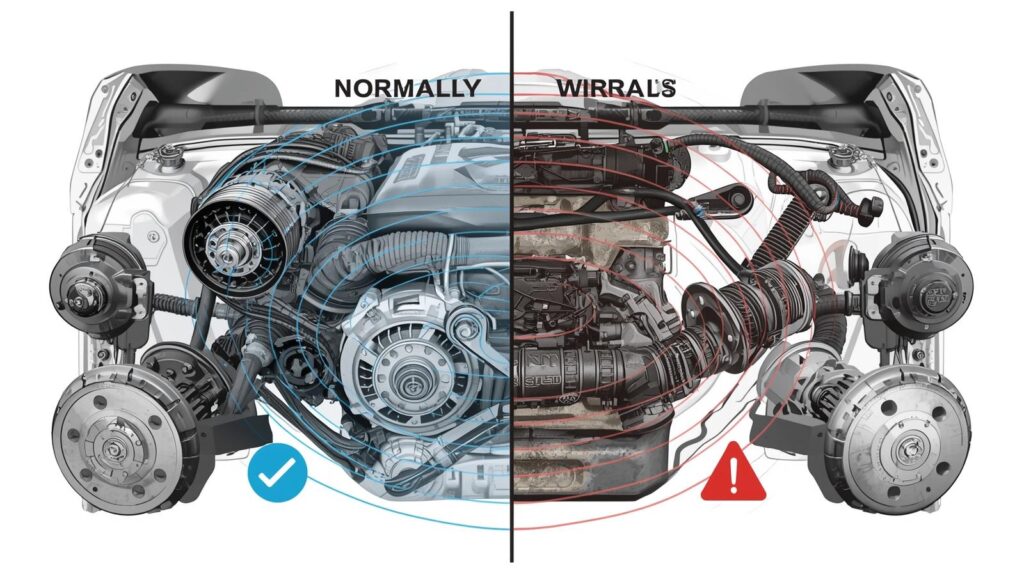
Mild whining during cold starts can be normal, especially in colder climates where fluids thicken. Light accessory noise that fades quickly is often harmless.
Abnormal noise persists when warm, grows louder over time, or changes suddenly. Sharp increases in volume or pitch demand inspection. Any whining accompanied by vibration or warning lights should not be ignored.
Model-Specific Notes (What Changes by Generation)
Each Toyota Tundra generation has different design traits that affect where noise is most likely to come from. Understanding these differences helps avoid misdiagnosis.
First-Generation Toyota Tundra
Older models often show accessory wear first. Belts, tensioners, and pumps are frequent sources of noise due to age rather than mileage.
Second-Generation Toyota Tundra
Differential noise complaints are more common, especially on higher-mileage trucks that tow frequently. Steering system wear also appears more often in this generation.
Third-Generation Toyota Tundra
Newer models are quieter overall, which makes any whining more noticeable. Intake and turbo-related air noise can be mistaken for mechanical whine.
Repair Options: What Fixes the Whining Noise
Not every whining noise requires major repairs, and many fixes are straightforward. This section outlines realistic repair paths from simple solutions to serious mechanical work.
Simple Fixes (Low Cost, High Success)
Belt replacement solves many cases quickly. Fluid flushes often quiet power steering pumps. Minor adjustments can eliminate resonance issues.
Moderate Repairs
Alternator replacement becomes necessary once bearing noise starts. Power steering pump service may be required if fluid changes do not help.
Major Repairs (Do Not Delay)
Differential rebuilds or replacements should not be postponed once confirmed. Transmission-related repairs demand professional diagnosis before damage spreads.
Repair Cost Breakdown (Realistic Estimates)
Belt and tensioner replacement is usually inexpensive compared to other repairs. Alternator replacement costs more but remains manageable. Power steering pump repairs vary widely depending on damage.
Differential repairs are costly and escalate if ignored. Transmission-related fixes carry the highest risk and expense, which makes early diagnosis critical.
Can You Keep Driving With a Whining Noise?
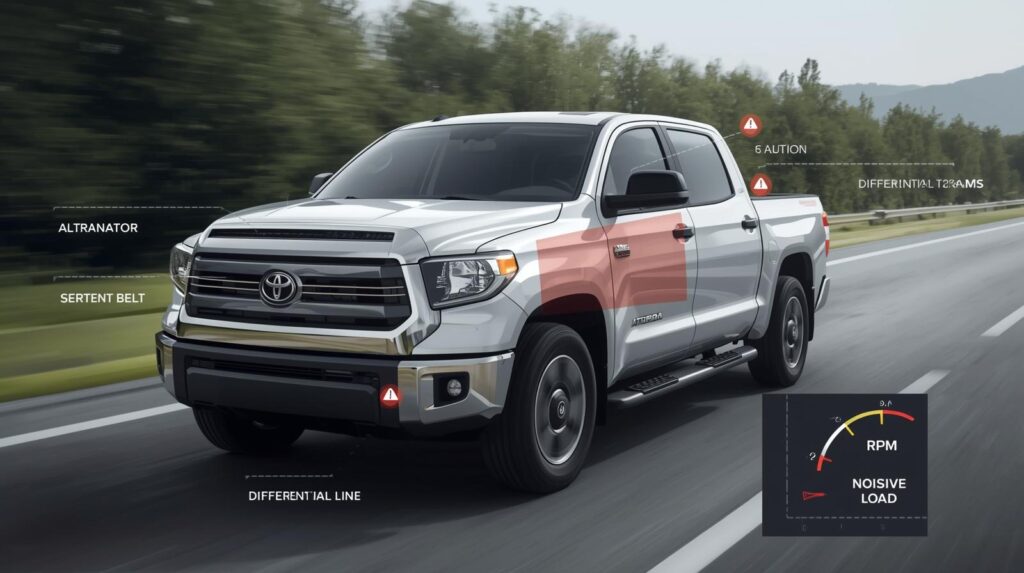
Short-term driving may be safe if the noise is mild and unchanged. Long-term driving with a worsening whine risks secondary damage. Differential and transmission noises tend to worsen rapidly once they begin. Safety is usually not immediate, but reliability is. Ignoring early sounds often turns small repairs into major ones.
Common Misdiagnoses Found in Online Forums
Alternators are blamed frequently because they are easy to name, not because they are always at fault. Power steering noise is often misunderstood because it can appear without steering input. Intake noise is regularly mistaken for mechanical failure, leading to unnecessary part replacement.
Preventing Whining Noises in the Future
Regular belt inspection matters more than many owners realize. Fluid condition checks prevent pump and gear wear. Early attention to small sound changes prevents expensive repairs later. Ignoring subtle noise is the most common mistake.
Conclusion
Instead of jumping to conclusions take a bit of time to actually notice how the sound behaves when the truck is under load when it warms up and when you press the throttle Start with the simple checks first before assuming something serious is wrong If the noise sticks around gets louder or starts to change then getting it checked by a professional becomes necessary Catching the problem early usually saves you money and a lot of hassle later Think of that whining sound as your truck trying to get your attention and the sooner you listen the better
FAQs
Is a whining noise during acceleration normal for a Toyota Tundra?
Light, brief noise can be normal. Persistent or growing noise is not.
Can low transmission fluid cause a whining noise?
Yes, especially under load, but it is not the most common cause.
Does a bad differential always whine under acceleration?
Often yes, but the sound may also appear during deceleration.
How much does it cost to fix a whining noise in a Tundra?
Costs vary widely depending on the source, from minor to significant.
Can a serpentine belt cause a high-pitched whine?
Yes, especially during cold starts or sudden acceleration.