Who Makes Toyota Brake Rotors | Full OEM Supplier Guide 2025
Replacing brake rotors on a Toyota vehicle is not a simple choice. Many owners assume that Toyota makes every part in-house, but the truth is more complex. The question “who makes Toyota brake rotors” arises because these components are critical for safety, durability, and performance.
Understanding the OEM suppliers, aftermarket alternatives, and how to choose the right rotor is crucial for both daily drivers and performance enthusiasts.
What Are OEM Brake Rotors?
OEM, or Original Equipment Manufacturer, refers to parts made specifically for a vehicle by a supplier approved by the automaker. For Toyota brake rotors, OEM parts are manufactured under strict specifications for material, thickness, surface finish, and thermal tolerances.
OEM rotors matter because they guarantee fit, braking performance, and compatibility with the vehicle’s ABS and caliper system. They are also backed by Toyota’s warranty when purchased through dealers. Using non-OEM parts without careful selection can lead to vibration, premature wear, or reduced braking efficiency. Real-world experience shows that installing a cheap aftermarket rotor that does not match Toyota’s exact specifications often results in uneven pad wear within just a few thousand miles.
Toyota OEM Brake Rotor Manufacturers
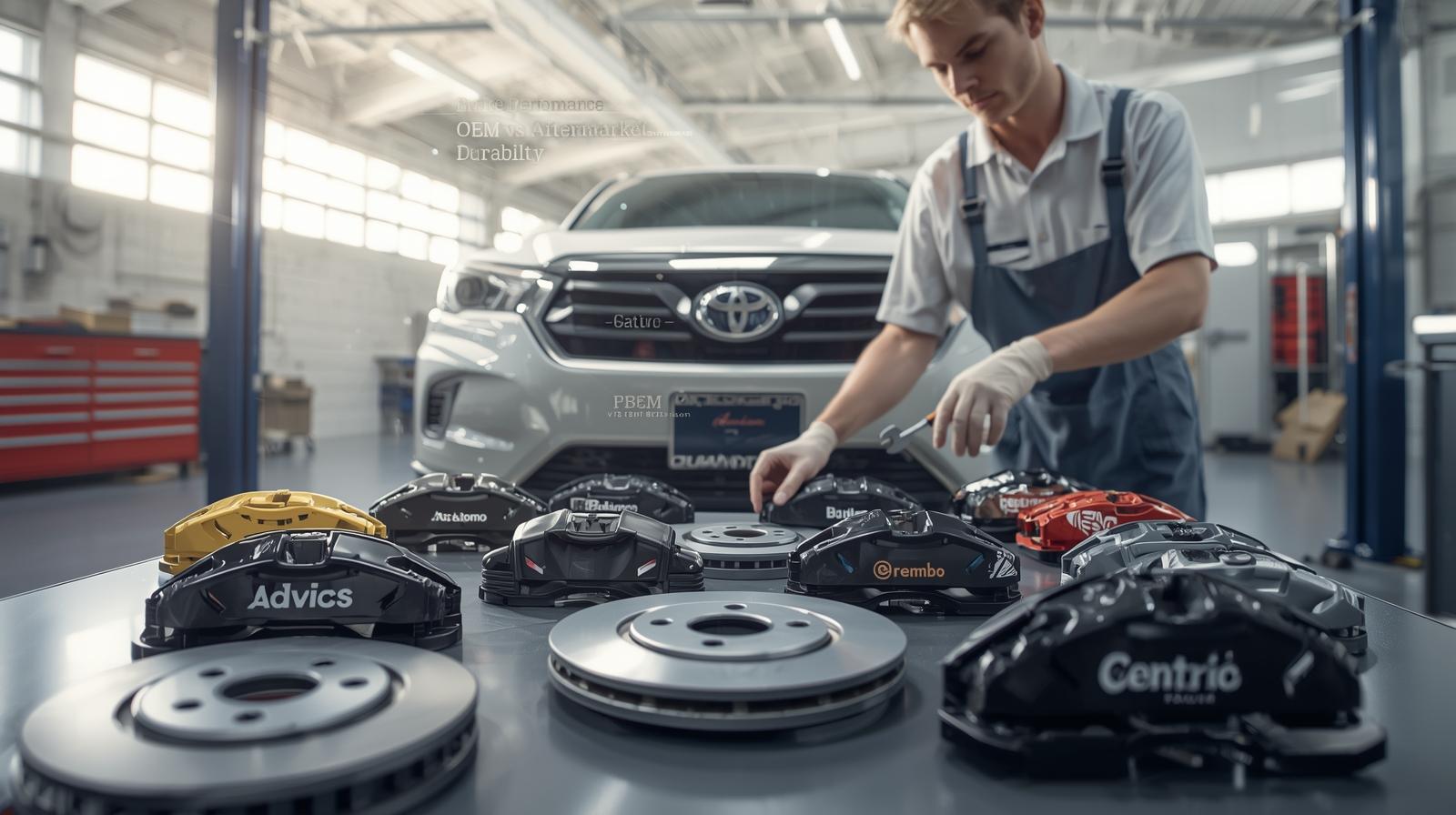
Toyota brake rotors come from several trusted OEM suppliers, each with its own production strengths and material standards. Understanding the main manufacturers helps you know what to expect in terms of quality, durability, and fit.
Advics: Major Toyota OEM Supplier
Advics is one of the largest suppliers of braking components to Toyota. The company produces rotors, calipers, and pads in high-volume manufacturing facilities, mostly in Japan, Thailand, and the United States. Advics rotors are known for consistency in material quality and precise machining.
They are the most commonly found OEM rotors in Toyota vehicles sold in North America. Owners often notice smooth braking performance and minimal noise when Advics rotors are installed, reflecting their engineering to Toyota standards.
Sumitomo: Tier‑1 Braking Parts Maker
Sumitomo is another Tier‑1 supplier, providing OEM rotors for various Toyota models over different production years. These rotors meet the same stringent tolerances as Advics but are sometimes sourced for specific models or production regions.
A common observation from mechanics is that Sumitomo rotors can feel slightly heavier due to material differences but offer exceptional durability for daily commuting and towing.
Akebono: Brake Components & Pads (rotors sometimes)
Akebono is widely recognized for manufacturing Toyota OEM brake pads, but in certain markets, they also supply rotors. Their parts emphasize low dust, quiet operation, and longevity. Toyota vehicles with Akebono-sourced rotors tend to demonstrate very predictable stopping performance with minimal bedding time required.
Other OEM Contributors & Geographic Variations
Toyota often contracts multiple suppliers globally. Depending on the production year, factory, and region, a “Toyota” rotor may come from Advics, Sumitomo, or a lesser-known regional supplier.
Understanding this is important because two vehicles of the same model and year might have different OEM rotor manufacturers. This multi-supplier approach ensures stable supply chains, competitive pricing, and consistent quality, but it is a detail many owners are unaware of.
Toyota’s Use of Multiple Suppliers Across Models
Toyota intentionally uses multiple suppliers to mitigate risks such as production delays or quality issues. It also allows them to adapt to regional regulations and optimize shipping logistics. This strategy explains why forums often have conflicting information on who actually makes a specific rotor.
How Toyota’s Brake Supply Chain Works
Toyota does not produce every rotor internally. Instead, the company relies on Tier‑1 suppliers who manufacture rotors to precise specifications. These parts are then shipped to assembly plants or dealers and sold as genuine Toyota parts.
Supplied rotors are often rebadged under Toyota’s part number system. Each rotor has a part number that identifies its application, supplier, and material specifications. Understanding this system helps buyers ensure the correct rotor for their vehicle, even if it originates from a different supplier than another vehicle of the same model.
OEM vs Aftermarket Brake Rotors
Choosing between OEM and aftermarket brake rotors can make a real difference in performance and longevity. Many Toyota owners feel confused because both choices have strong pros and real limitations depending on how they drive.
Quality & Warranty Differences
OEM rotors are engineered for exact compatibility and are often covered by Toyota’s warranty. This ensures peace of mind for the owner. Aftermarket rotors can range from high-quality options that exceed OEM standards to cheap, poorly machined alternatives that wear unevenly or warp under heat. Real-world experience shows that low-cost aftermarket rotors are the leading cause of brake pulsation complaints in online forums.
Performance, Fit & Durability
OEM rotors guarantee precise fitment, which prevents pad chatter and uneven braking. Aftermarket rotors may improve performance in heavy-duty or performance applications but require careful selection. For example, high-carbon steel or slotted designs can dissipate heat more efficiently but might produce more brake dust.
Pricing Comparison
OEM rotors are generally more expensive than aftermarket options due to the brand and warranty coverage. Aftermarket brands such as Raybestos, Centric, and PowerStop offer cost savings but may vary in performance. Buyers often weigh price against expected longevity and driving conditions. For example, a daily commuter may benefit most from OEM rotors, while a towing vehicle might justify high-end aftermarket rotors.
Common Aftermarket Rotor Brands (Alternatives)
Aftermarket brake rotors provide alternatives for Toyota owners seeking different performance, durability, or price options. Knowing the key brands helps you choose the right rotor for daily driving, towing, or high-performance needs.
Brembo: High‑Performance Option
Brembo rotors are recognized worldwide for racing and high-performance applications. Although they are not OEM for Toyota, they provide exceptional thermal resistance and stopping power for enthusiasts or track use. Many owners report smoother pedal feel and reduced fade under extreme braking conditions.
Raybestos / Wagner Mid‑Tier Choice
Raybestos and Wagner provide reliable aftermarket options that balance performance and cost. These rotors often match OEM fitment but offer optional coatings to resist rust. Mechanics frequently recommend these brands for daily drivers who want OEM-like quality without dealer pricing.
PowerStop, Centric, Bosch Value & Coating Styles
These brands offer coated rotors for corrosion resistance and are widely available. Centric rotors, for instance, include pre-lubricated hardware and minimal machining defects, which reduce installation errors. PowerStop is popular in forums for street-performance applications where slotted or drilled rotors are preferred.
How to Choose the Right Brake Rotors for Your Toyota
Selecting the correct brake rotors depends on how you use your Toyota and what performance expectations you have. Understanding usage patterns ensures the rotors will provide safety, durability, and optimal braking performance.
Vehicle Usage (Daily vs Towing vs Performance)
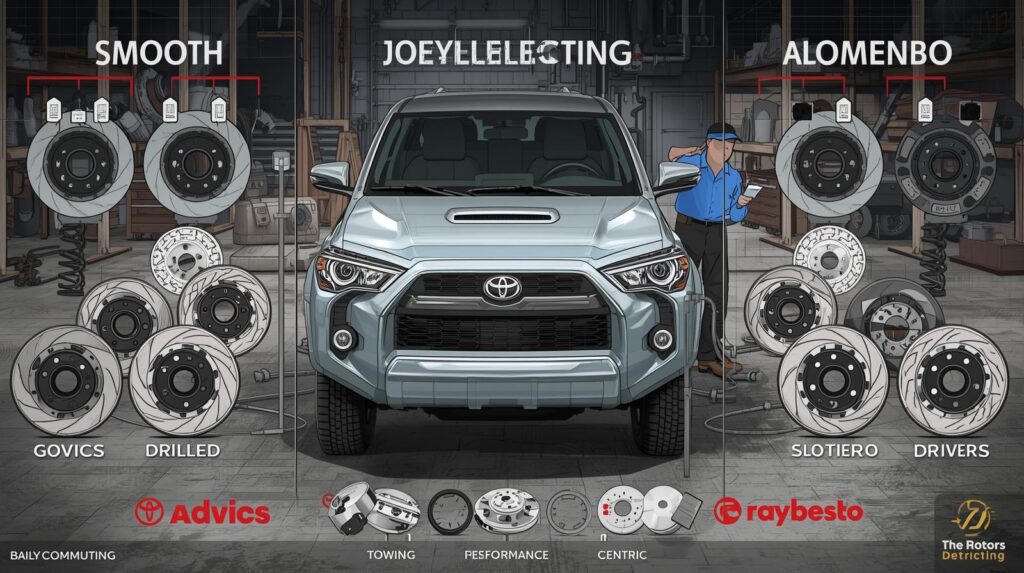
Your driving style should influence rotor choice. Daily commuting vehicles benefit from OEM rotors with minimal noise. Trucks used for towing or SUVs often experience heavier loads, requiring rotors with better heat dissipation. Performance enthusiasts might prefer slotted or drilled aftermarket rotors to handle high temperatures on spirited drives.
Rotor Type (Smooth, Drilled, Slotted)
Smooth rotors provide quiet operation and low wear. Drilled rotors help dissipate heat but may crack under heavy braking. Slotted rotors improve pad bite and gas evacuation, ideal for performance or towing applications. Many Toyota owners do not realize that OEM rotors are generally smooth unless specific performance packages are selected.
Material & Coating Considerations
Steel quality, coating, and balancing affect rotor longevity. OEM rotors are precision-balanced and use high-quality steel. Aftermarket options may include protective coatings for rust prevention. Owners in humid or winter climates often prefer coated rotors to avoid corrosion.
Step‑by‑Step Brake Rotor Replacement Tips
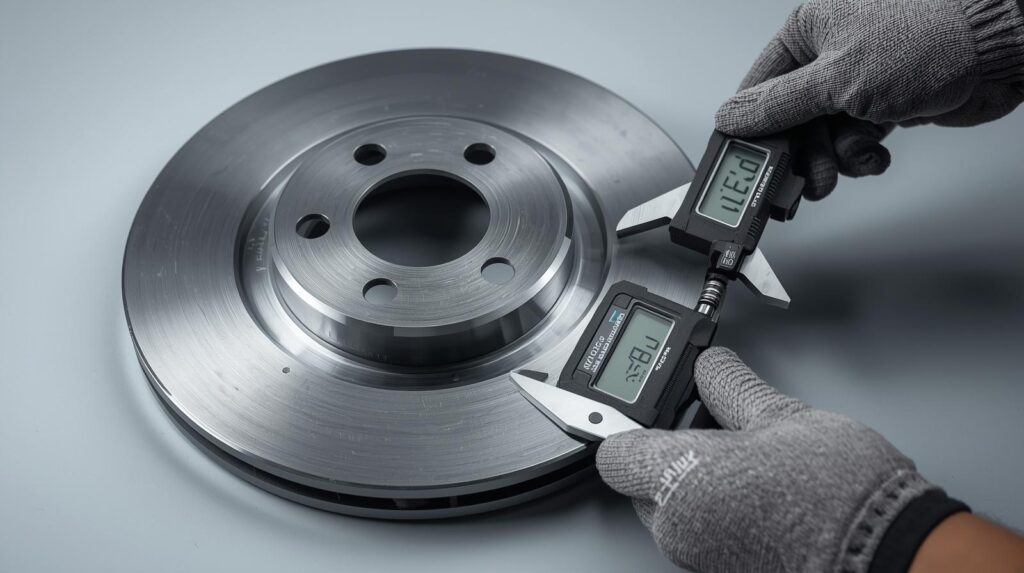
Replacing rotors requires attention to detail. Always measure rotor thickness before replacing. Use calipers or micrometers to ensure minimum specifications are met. Removing the old rotor may require breaking rusted bolts or using penetrating oil.
Installing a new rotor requires clean surfaces, proper torque, and sometimes thread-locking compounds for caliper bolts. Testing braking performance after installation is critical to ensure safety.
Common Misconceptions About OEM Rotors
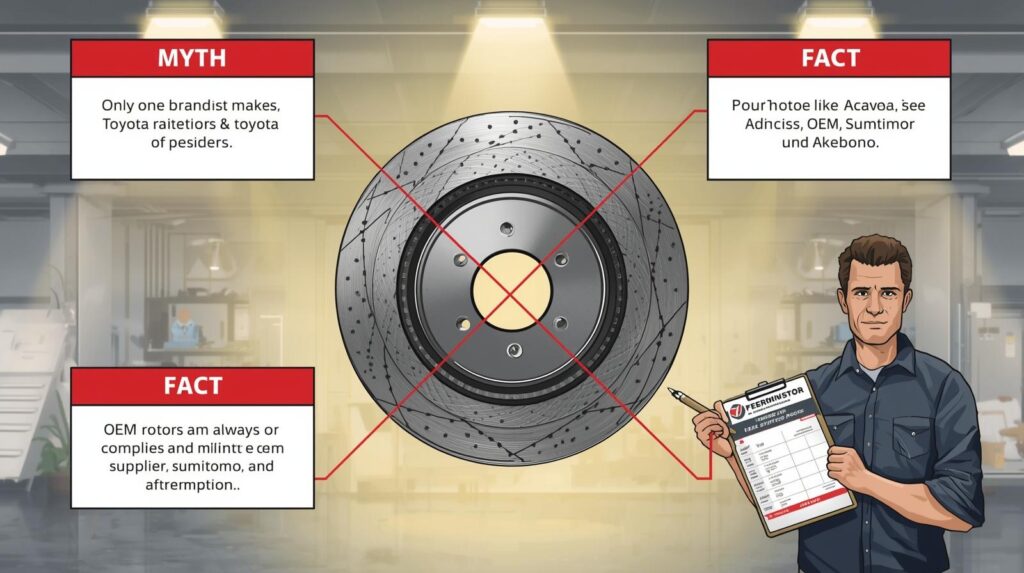
- The idea that only one brand makes Toyota rotors is false. Multiple Tier‑1 suppliers, including Advics, Sumitomo, and Akebono, produce OEM rotors.
- Another myth is that OEM rotors are always better. High-quality aftermarket rotors can match or exceed OEM performance in certain situations, such as racing or towing.
- Many owners assume all Toyota rotors are identical, but differences in supplier and region can affect surface finish and noise characteristics.
Conclusion
For everyday driving, OEM rotors from Advics or Sumitomo offer the safest and most reliable choice, providing warranty coverage and consistent braking performance. For high-performance driving, towing, or heavy-duty applications, aftermarket rotors from Brembo, Raybestos, Centric, or Bosch are excellent alternatives if selected carefully.
Understanding your vehicle, driving habits, and regional conditions ensures that the rotors you choose will provide safety, durability, and peace of mind.
FAQs
Who actually makes Toyota OEM brake rotors?
Common manufacturers include Advics, Sumitomo, and sometimes Akebono. Suppliers vary by model, year, and production region.
Are Advics rotors original Toyota OEM?
Yes, Advics produces genuine Toyota OEM rotors used in many North American vehicles.
Are aftermarket rotors better than OEM?
Some aftermarket rotors outperform OEM in performance or durability, but fitment and materials must be verified.
How often should Toyota rotors be replaced?
Factory rotors often last 50,000 to 80,000 miles, depending on driving style, terrain, and load.
Can I mix OEM pads with aftermarket rotors?
Yes, but ensure that material and surface properties match to prevent uneven wear or noise.