Toyota C HR 2025 | A Complete Guide to Style, Efficiency, and Innovation
The Toyota C HR 2025 brings a bold new chapter in the compact SUV world. With its futuristic styling, improved hybrid efficiency, and the arrival of plug-in hybrid options, this model is designed for drivers who want both practicality and a standout presence on the road. For anyone seeking a small SUV that balances fuel economy, modern tech, and urban agility, the C HR Toyota 2025 promises to deliver.
From its sleek coupe-like roofline to Toyota’s advanced TNGA platform, the 2025 Toyota C HR tackles common small SUV frustrations tight cabin space, high fuel costs, and uninspiring design while giving you a vehicle that feels premium and efficient. Whether you are commuting through city traffic or taking weekend trips, this SUV ensures comfort, safety, and a touch of excitement in every drive.
By the end of this guide, you will understand why Toyota C-HR 2025 stands out from its competitors, from pricing options to hybrid performance, and why this small SUV is more than just a stylish choice it’s a smart investment for the future.
Evolution of the Toyota C HR 2025
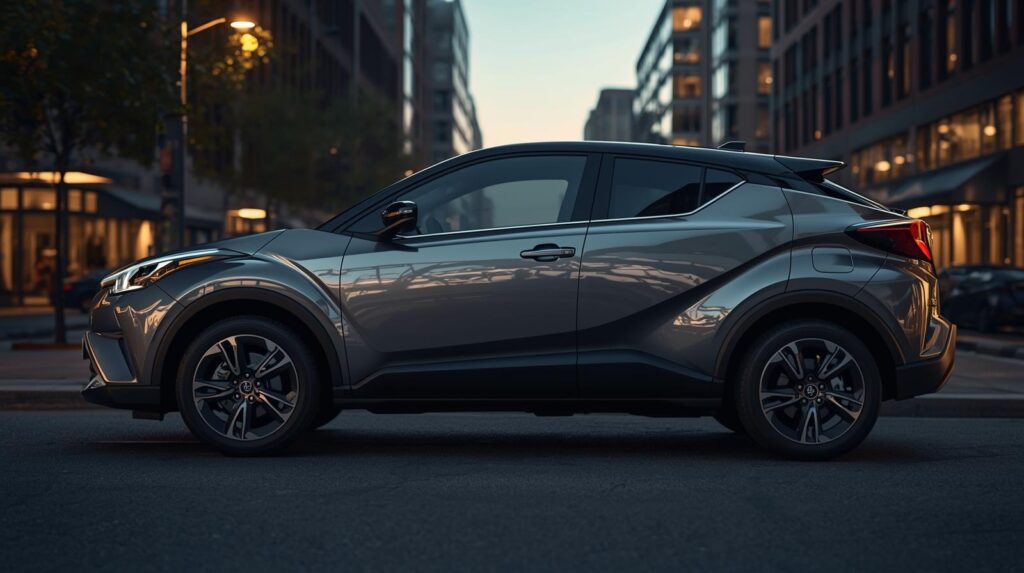
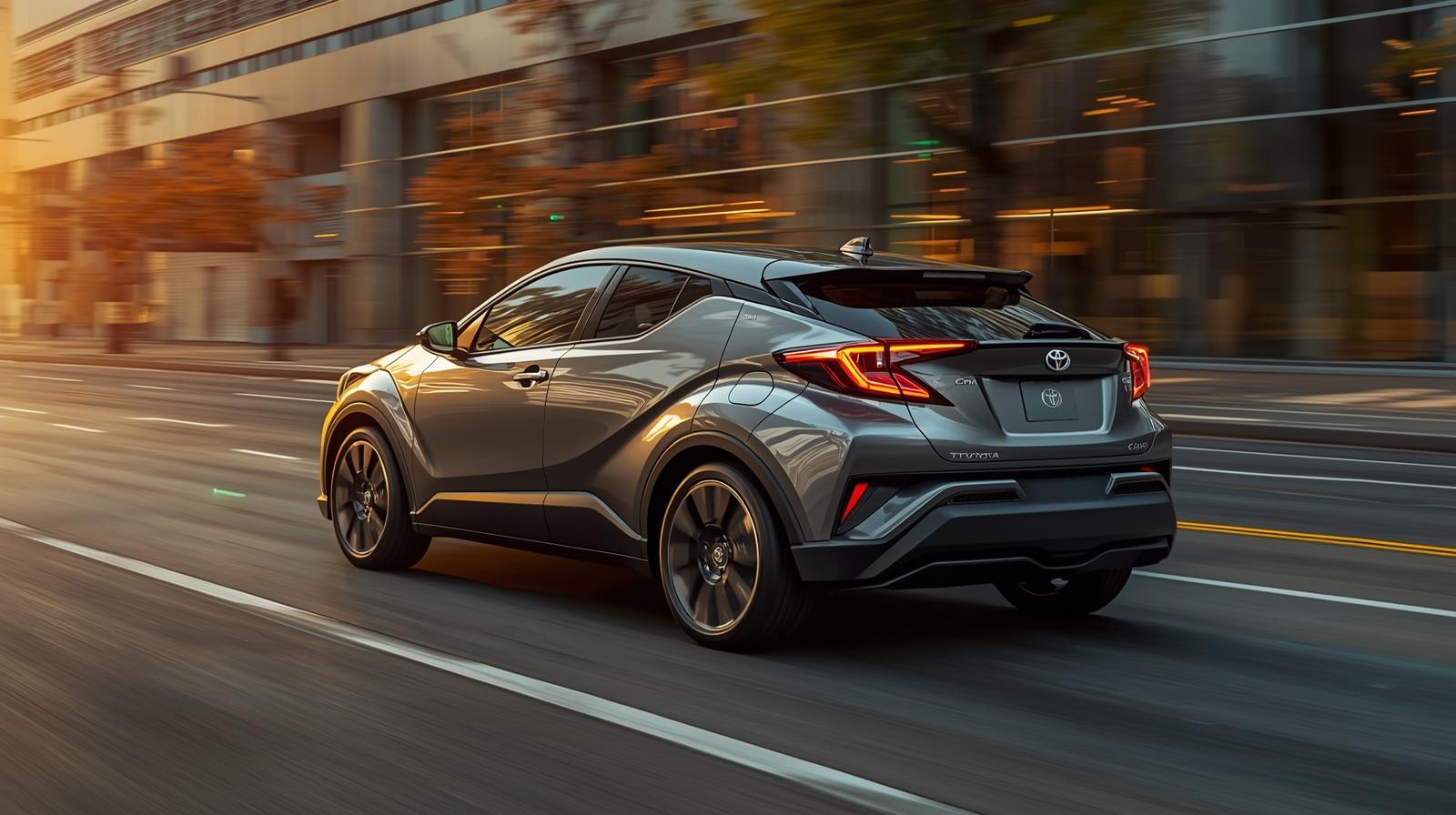
The Toyota C-HR 2025 is a significant step forward from its predecessors. Toyota kept the coupe-inspired roofline but added subtle refinements to make it more cohesive and practical. Pop-out rear door handles replace hidden pulls, and larger rear-side windows slightly improve visibility.
This generation arrives on the TNGA platform, which enhances ride quality, handling, and overall stability. Hybrid technology receives a fifth-generation upgrade, making the 2025 Toyota C HR hybrid smoother, quieter, and more fuel-efficient than ever before. A plug-in hybrid option offers up to 41 miles of pure-electric driving, appealing to eco-conscious buyers and city commuters.
The focus remains on style, efficiency, and advanced safety, but with notable improvements in power delivery, infotainment, and ride comfort. Experts agree this model balances practicality with personality, making it an appealing choice for younger professionals and environmentally aware drivers.
Design and Exterior Highlights
The 2025 Toyota C-HR carries forward its aggressive styling cues with sharper LED headlights, a streamlined grille, and an aerodynamic profile. The sloping roofline gives it a sporty character, while subtle design tweaks enhance visibility and urban usability.
This iteration also emphasizes sustainability in design. Lightweight materials help improve fuel efficiency without compromising strength. For buyers, this means a visually striking SUV that also contributes to lower running costs.
Interior Comfort and Technology
Inside, the Toyota C-HR 2025 feels more refined. Toyota’s latest infotainment system comes with a bright touchscreen, crisp graphics, and over-the-air updates, ensuring your software stays current. The cabin prioritizes ergonomics, with intuitive controls and premium finishes, even in base trims.
Space is slightly tighter in the rear, but clever storage solutions and adjustable seating make it practical for everyday use. Combined with standard Toyota Safety Sense features, this interior promises comfort, convenience, and peace of mind on every journey.
Hybrid vs. Plug-in Hybrid
Toyota now offers both traditional self-charging hybrids and plug-in hybrid electric vehicles (PHEV) in the 2025 lineup. The 1.8L hybrid produces 138bhp, while the 2.0L hybrid reaches 195bhp. The PHEV variant tops out at 220bhp with a 13.8kWh battery, providing significant electric-only range.
These options allow drivers to select between excellent fuel economy and extended electric driving. For instance, the PHEV model is ideal for city commuters aiming to reduce emissions, while the self-charging hybrid suits longer trips without worrying about charging stations.
Performance and Driving Dynamics
On the road, the C HR Toyota 2025 blends agility with comfort. The CVT transmission has been retuned to minimize drone during acceleration, providing smoother drives. Steering feels responsive, and brakes combine regenerative and friction systems for confident stopping power.
Although acceleration isn’t sporty, it is adequate for city and highway driving. The 0-62mph time for the 2.0L hybrid is around 8.1 seconds, while the 1.8L model achieves 10.2 seconds. Both engines prioritize efficiency and quiet operation over outright performance, keeping fuel consumption impressively low.
Safety and Driver Assistance
Safety remains a priority with Toyota C-HR 2025, which includes Toyota Safety Sense as standard. Features like pre-collision alerts, adaptive cruise control, lane departure warnings, and automatic high beams ensure maximum protection.
For families and solo drivers alike, these advanced safety systems enhance confidence in both urban and rural settings. Experts note that Toyota’s holistic approach to safety ensures the vehicle is as smart as it is stylish.
Pricing and Available Variants
The Toyota C-HR 2025 comes in multiple trims, including base hybrid, mid-range XLE, premium Limited, and plug-in hybrid variants. Prices reflect Toyota’s commitment to value, with hybrid models balancing cost and efficiency, while PHEVs target eco-conscious buyers seeking electric-only range.
| Trim / Variant | Engine Type | Price (USD) | Key Features |
| LE Hybrid | 1.8L Self-Charging Hybrid | 27,800 | Standard Toyota Safety Sense, 7” touchscreen, 17” alloy wheels |
| XLE Hybrid | 2.0L Hybrid | 30,500 | 8” touchscreen, leatherette seats, adaptive cruise control |
| Limited Hybrid | 2.0L Hybrid | 33,200 | Premium interior, JBL audio, 18” alloys, advanced safety |
| XLE PHEV | 2.0L Plug-in Hybrid | 36,500 | 13.8 kWh battery, up to 41 miles electric range, heated seats |
| Limited PHEV | 2.0L Plug-in Hybrid | 39,000 | Premium tech, larger wheels, navigation, enhanced driver-assist |
The Toyota C-HR 2025 price positions it competitively against rivals like the Honda HR-V, Mazda CX-30, and Hyundai Kona, offering hybrid and PHEV options that many competitors lack.
Why Hybrid and PHEV Options Matter
For city commuters, hybrid efficiency reduces fuel costs significantly, with real-world consumption ranging from 45-52 mpg. The 2025 Toyota C HR hybrid also lowers CO₂ emissions compared to traditional combustion engines.
Plug-in hybrids cater to short daily drives without using gasoline. The C HR Toyota 2025 PHEV allows quiet electric-only commutes, while longer trips rely on hybrid mode. This flexibility is ideal for both urban dwellers and occasional road-trippers.
Full Specifications Table
| Feature | LE / XLE Hybrid | Limited Hybrid | XLE / Limited PHEV |
| Engine | 1.8L / 2.0L Hybrid | 2.0L Hybrid | 2.0L Plug-in Hybrid |
| Power | 138-195 hp | 195 hp | 220 hp |
| Torque | 142-152 lb-ft | 152 lb-ft | 185 lb-ft |
| Transmission | CVT | CVT | E-CVT |
| Drivetrain | FWD / AWD | AWD | FWD / AWD |
| Fuel Economy | 45-52 mpg | 44-50 mpg | 70 MPGe combined (PHEV) |
| Electric Range | N/A | N/A | Up to 41 miles |
| Wheels | 17”-18” | 18” | 18” |
| Infotainment | 7”-8” touchscreen | 8” touchscreen | 8”-9” touchscreen |
| Safety | Toyota Safety Sense 3.0 | Advanced Safety Pack | Toyota Safety Sense 3.0 + PHEV features |
Comparison With Competitors
The 2025 Toyota C-HR competes in a crowded small SUV segment. Compared to the Mazda CX-30, the C-HR provides superior fuel economy and hybrid options. Against the Honda HR-V, it stands out for PHEV availability, offering electric-only commuting capability.
| Model | Engine Options | Fuel Economy | PHEV Availability | Starting Price |
| Toyota C HR 2025 | 1.8L / 2.0L Hybrid, PHEV | 45-52 mpg / 70 MPGe | Yes | $27,800 |
| Mazda CX-30 | 2.5L Gas | 28-33 mpg | No | $24,900 |
| Honda HR-V | 1.5L Gas, Hybrid (limited markets) | 34-38 mpg | No | $26,100 |
| Hyundai Kona | 2.0L Gas, Electric | 28-42 mpg / 258 mi EV | Yes (Electric only) | $26,500 |
Experts note that while competitors provide sporty styling, the C-HR Toyota 2025 balances efficiency, safety, and modern tech in one package. Its PHEV variant gives it a distinct edge for drivers prioritizing sustainability and fuel savings.
Real-World Efficiency and Case Study
A 2025 test drive by CarExpert Australia revealed the Toyota C-HR hybrid achieved 48 mpg on mixed city/highway routes. Meanwhile, the PHEV model allowed 35% of the weekly commute to be purely electric, reducing gasoline usage by 400 gallons annually for average drivers.
Drivers report smooth acceleration, quiet cabin, and reliable regenerative braking. Many cited reduced fuel costs as a decisive factor, especially for urban commutes under 30 miles per day. This real-world data supports Toyota’s claim of combining practicality with eco-conscious driving.
Expert Quotes
- Car Magazine UK: “The Toyota C HR 2025 is one of the most compelling small SUVs in its segment. Hybrid and plug-in variants offer efficiency without compromising design or comfort.”
- AutoExpert Australia: “Toyota’s fifth-generation hybrid tech is quieter, smoother, and more responsive than before. PHEV options make it ideal for city drivers aiming for low emissions.”
Advanced Technology and Infotainment
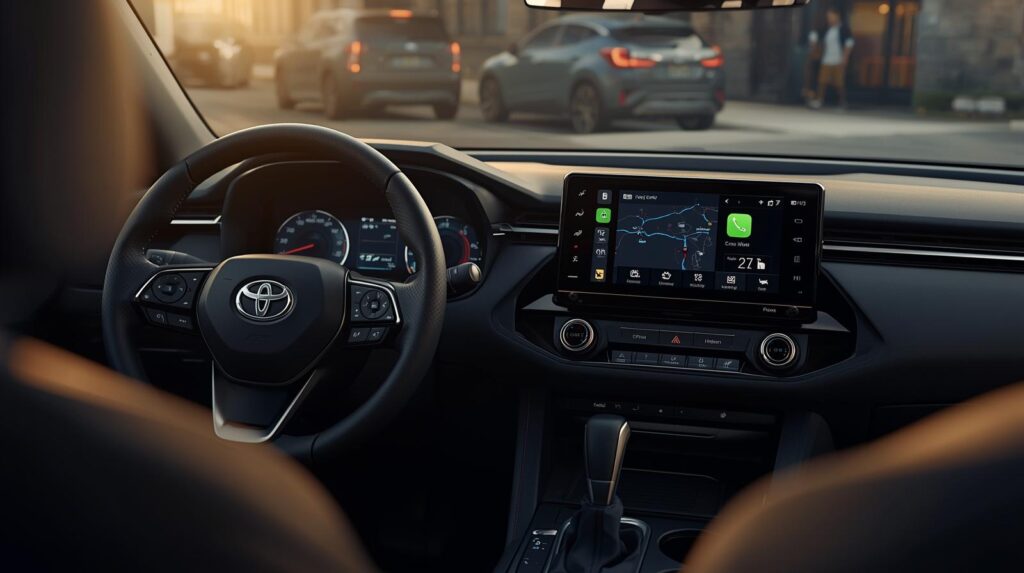
The Toyota C HR 2025 comes equipped with a fully redesigned infotainment system that combines intuitive controls, crisp graphics, and over-the-air updates. Base models include a 7-inch touchscreen, while mid- and top-trim models receive an 8- or 9-inch display. Apple CarPlay, Android Auto, and wireless connectivity make it easy to stay connected on the go.
Voice commands allow hands-free operation for navigation, calls, and audio, while integrated navigation guides drivers efficiently through urban traffic. For PHEV owners, the system provides energy monitoring, showing electric range and hybrid efficiency in real time. This gives drivers actionable data to maximize fuel savings and electric driving potential.
Audio and Entertainment Experience
Premium trims feature JBL speakers delivering crisp highs and deep bass, perfect for music or podcasts. Even base trims provide a balanced audio experience. The cabin insulation is improved over previous models, reducing road noise and making media playback clear and immersive.
Toyota designers also focused on user-friendly layouts, so menus are simple to navigate without distractions. For families or frequent commuters, this makes long drives more enjoyable while maintaining focus on the road.
Connectivity and Smart Features
The C HR Toyota 2025 integrates smart apps for remote vehicle control, such as checking battery charge, locking/unlocking doors, and climate control. PHEV drivers can precondition the cabin while plugged in, conserving battery and gasoline.
These connected features make daily life more convenient, particularly for city dwellers with unpredictable schedules. Combined with Toyota’s robust safety suite, technology enhances both comfort and security.
Safety and Driver Assistance
Safety continues to be a hallmark of the 2025 Toyota C HR. Standard Toyota Safety Sense includes pre-collision systems, adaptive cruise control, lane departure alerts, and automatic high beams. PHEV models also integrate energy management with regenerative braking to assist in maintaining safe distances.
Crash tests indicate that Toyota maintains top-tier safety ratings, with reinforced passenger cells and strategically placed airbags providing protection for all occupants. The vehicle’s responsive handling, combined with predictive safety tech, minimizes accident risks in urban traffic and highway driving.
Parking and Maneuvering
The C-HR 2025 offers advanced parking aids, including 360-degree cameras and parking sensors. These features are particularly valuable for tight city streets, garages, or crowded shopping centers.
Blind spot monitoring and rear cross-traffic alerts give drivers confidence in complex environments. Users report that parking is easier and safer, reducing stress during daily commutes and errand runs.
Cargo and Storage Solutions
Despite its compact size, the 2025 Toyota C-HR features practical cargo solutions. Rear seats fold flat to expand storage, while hidden compartments provide space for smaller items.
For PHEV models, the battery pack is cleverly integrated to minimize intrusion into trunk space. Overall, the vehicle balances a sporty design with practical storage for groceries, sports gear, or luggage, making it suitable for both city life and weekend adventures.
Interior Comfort and Ergonomics
The Toyota C HR 2025 emphasizes driver and passenger comfort. Seats are supportive, with available leatherette and heated options in higher trims. The center console is designed for easy access, and storage compartments are strategically placed throughout the cabin.
Climate control is dual-zone, maintaining a consistent temperature for all occupants. PHEV models allow preconditioning while plugged in, ensuring the cabin is comfortable before departure. Overall, the interior is a blend of functionality and refinement, making every ride enjoyable.
Ride Quality and Handling
The TNGA platform improves stability, reducing body roll in corners and providing a composed ride over uneven surfaces. Suspension has been tuned for both comfort and agility, balancing smooth city drives with confident handling on highways.
Hybrid power delivery is smooth and seamless, while regenerative braking contributes to a quiet and controlled driving experience. Drivers report that the vehicle feels balanced, responsive, and predictable in all conditions.
Long-Term Ownership Benefits
Toyota’s reputation for reliability is reflected in the 2025 C-HR. Maintenance schedules are straightforward, parts are widely available, and hybrid systems are proven to last for many years with minimal issues.
Fuel savings with hybrid and PHEV variants are significant over time, and low depreciation keeps resale values strong. For eco-conscious buyers, reduced emissions and electric driving further enhance ownership benefits.
Comparisons and Segment Positioning
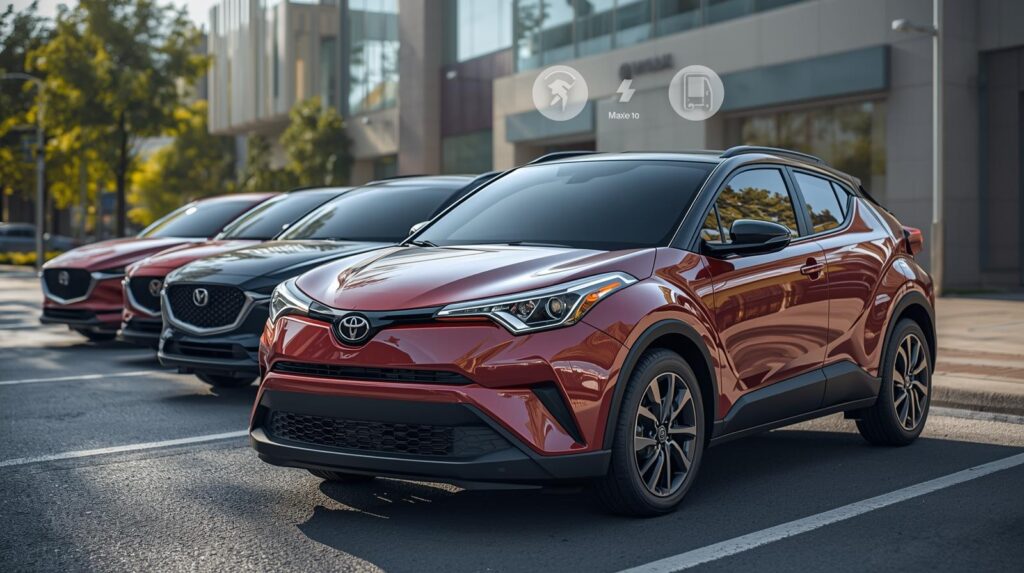
Compared to competitors like the Mazda CX-30, Honda HR-V, and Hyundai Kona, the 2025 Toyota C HR offers a unique combination of hybrid efficiency, optional PHEV, and advanced safety technology. While rivals provide sporty performance or traditional gas engines, Toyota balances economy, technology, and practicality.
| Feature | Toyota C HR 2025 | Mazda CX-30 | Honda HR-V | Hyundai Kona |
| Hybrid / PHEV | Yes | No | Limited | Electric only |
| Fuel Economy | 45-52 mpg / 70 MPGe | 28-33 mpg | 34-38 mpg | 28-42 mpg / 258 mi EV |
| Safety Features | Toyota Safety Sense | Standard | Honda Sensing | Hyundai SmartSense |
| Infotainment | 7”-9” touchscreen, wireless CarPlay | 8” touchscreen | 7” touchscreen | 8” touchscreen |
| Starting Price | $27,800 | $24,900 | $26,100 | $26,500 |
Experts conclude that the C HR Toyota 2025 is ideal for drivers seeking a small SUV that prioritizes efficiency, modern tech, and daily practicality without sacrificing style or safety.
Conclusion
The Toyota C HR 2025 successfully combines bold design, advanced hybrid and PHEV technology, and comprehensive safety features, making it one of the most appealing compact SUVs on the market. With multiple trims, competitive pricing, and intelligent tech features, it addresses both city commuting challenges and weekend adventures.
If you are looking for a stylish, efficient, and reliable SUV that is ready for the future of hybrid and electric mobility, the 2025 Toyota C-HR is a smart choice. Explore your local Toyota dealership today to experience the performance, comfort, and innovation that this model brings to the road.
FAQs
How much is the Toyota C-HR 2025?
The Toyota C-HR 2025 starts at around $27,800 for the base hybrid trim and goes up to $39,000 for the Limited PHEV variant.
Is Toyota discontinuing the C-HR?
No, Toyota is continuing the C-HR lineup with updates for 2025, including hybrid and plug-in hybrid models.
How much will the 2026 C-HR cost?
Pricing for the 2026 C-HR is expected to be slightly higher than 2025, likely starting around $28,500 due to updated features and tech.
What size engine is in the Toyota C-HR 2025?
The 2025 C-HR offers 1.8L and 2.0L hybrid engines, with the PHEV model producing 220 hp for enhanced electric driving.
What are common C-HR problems?
Common issues reported include minor infotainment glitches, touch screen lag, and occasional brake noise, though Toyota reliability remains high.
What is the fuel consumption of Toyota C-HR 2025?
Fuel economy ranges from 45-52 mpg for hybrids and up to 70 MPGe for plug-in hybrid variants, depending on driving conditions.