

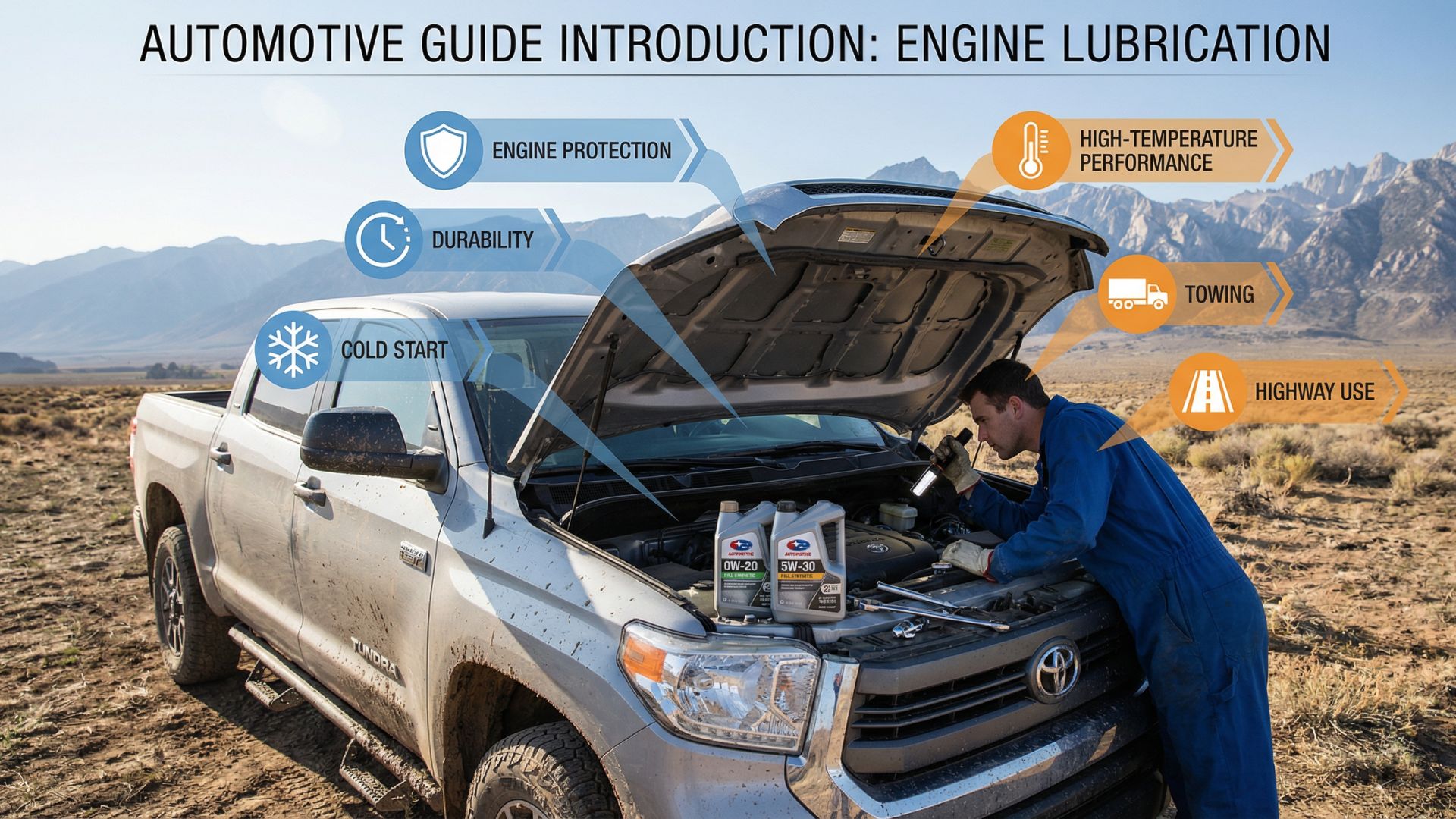
You know engine oil choices for a Toyota Tundra are often treated like something simple but they actually have a big impact on engine life and performance under heavy work and even extreme temperatures. A lot of owners just look for quick answers online but those answers usually do not explain the real reason behind Toyota oil recommendations or how different driving conditions truly change what the engine needs.
This guide brings clarity. It explains oil choice by year and engine, breaks down viscosity in simple language, and connects factory recommendations with real-world usage such as towing, heat, cold starts, and high mileage ownership.
What is the Toyota Tundra Oil Type

Most modern Toyota Tundra models use 0W 20 full synthetic motor oil as the main recommendation. Toyota selects this oil because it reduces internal friction improves lubrication during cold starts and helps meet fuel efficiency goals while still keeping strong engine protection in place.
Full synthetic oil is preferred because it resists breakdown at high temperatures, flows faster during cold starts, and maintains consistent protection under heavy loads. Older Tundra engines allow thicker oil options, but newer engines are engineered specifically for low-viscosity synthetic oil.
Understanding Toyota Tundra Oil Viscosity (Explained Simply)
Oil viscosity numbers often feel confusing at first but they are actually very important for proper engine protection. Here we are going to connect these numbers with real driving situations so it becomes much easier to understand how they work in everyday use.
What Do Oil Numbers Like 0W-20 and 5W-30 Mean?
The first number reflects how the oil behaves in cold temperatures. A lower number means faster flow when the engine starts cold. The second number represents thickness once the engine reaches operating temperature. Thicker oil maintains a stronger film under heat, but it also creates more resistance.
Why Toyota Chooses These Oil Weights
Toyota designs engine clearances, oil pumps, and bearing tolerances around specific oil viscosities. Using thinner oil in modern engines reduces drag, improves efficiency, and ensures oil reaches critical parts quickly. This is especially important during cold starts, when most engine wear occurs.
Cold Start Protection vs High-Temperature Performance
Cold starts need oil that flows quickly through the engine. High temperatures need oil that stays stable and does not break down. A good oil choice manages both situations together. For daily driving 0W 20 works very well and gives solid protection. When towing for long periods or driving in extreme heat a slightly thicker oil can help keep pressure steady and maintain a strong protective film inside the engine.
Toyota Tundra Oil Type by Year and Engine
Not all Tundras are the same, and oil requirements change depending on the model year and engine type. This section removes guesswork and gives precise guidance for each variation.
2000–2006 Toyota Tundra (4.7L V8)
These engines were built with wider tolerances than modern designs.
Recommended oil is 5W-30, either conventional or synthetic. Synthetic oil improves longevity but is not mandatory.
2007–2013 Toyota Tundra (4.0L V6, 4.6L & 5.7L V8)
The V6 and early V8 engines typically use 5W-30.
Later 5.7L V8 models transition toward 0W-20 for efficiency, though 5W-20 remains acceptable in many climates.
2014–2021 Toyota Tundra (5.7L V8)
Toyota specifies 0W-20 full synthetic oil.
This engine depends on low-viscosity oil for proper lubrication and fuel economy.
2022–Present Toyota Tundra (3.4L Twin-Turbo V6 & Hybrid)
These engines require 0W-20 full synthetic oil that meets modern API and ILSAC standards. Turbochargers generate intense heat, making oil quality critical.
Toyota Tundra Oil Capacity (With Filter)

Oil capacity matters as much as oil type. Too little oil increases wear. Too much oil causes aeration and pressure loss. Approximate capacities:
- 4.7L V8: 6.6 quarts
- 4.0L V6: 5.5 quarts
- 4.6L V8: 7.4 quarts
- 5.7L V8: 7.9 quarts
- 3.4L Twin-Turbo V6: 6.1 quarts
Always measure carefully after filling. Overfilling can push oil into the crankcase ventilation system and reduce lubrication quality.
Best Oil Type for Toyota Tundra Based on Driving Conditions
Driving style and usage directly affect which oil is best, whether for daily commuting or heavy towing. This section aligns oil recommendations with real-world driving scenarios.
Daily Driving and Highway Use
0W-20 full synthetic performs best for commuting, light hauling, and steady highway speeds.
Heavy Towing and Hauling
Engines pulling trailers for long distances generate higher oil temperatures. In older engines, 5W-30 provides additional thermal stability and pressure protection.
Hot Climate Driving
Sustained heat breaks oil down faster. Slightly thicker oil in approved engines maintains viscosity under extreme temperatures.
Cold Climate Driving
Cold mornings demand quick oil flow. 0W-20 reaches bearings and camshafts faster, reducing startup wear.
High-Mileage Toyota Tundra Engines
High-mileage synthetic oil helps reduce consumption and supports aging seals. It does not harm the engine and often improves smoothness.
Synthetic vs Conventional Oil: What Is Best for Tundra?
Synthetic oil resists oxidation, holds viscosity longer, and protects better under stress. Conventional oil breaks down sooner and requires shorter change intervals. While synthetic oil costs more upfront, it reduces long-term wear and extends engine life, especially in newer or turbocharged engines.
Best Engine Oil Brands for Toyota Tundra
- Toyota Genuine Motor Oil is designed to match factory specifications precisely.
- Mobil 1 offers strong thermal stability and cleanliness.
- Castrol Edge emphasizes film strength under pressure.
- Valvoline provides consistent protection at a competitive price.
- Pennzoil Platinum uses gas-to-liquid technology for cleanliness and efficiency.
The key factor is meeting the correct specification, not just the brand name.
Toyota Tundra Oil Change Interval (Real-World Guide)
Manuals list ideal oil change intervals, but real driving conditions are often different. This guide adjusts recommendations based on actual use and stress on the engine.
Normal Driving
Every 10,000 miles or 12 months when using full synthetic oil.
Severe Driving Conditions
Frequent short trips, dust, idling, or stop-and-go traffic justify shorter intervals around 5,000 to 7,000 miles.
Towing and Off-Road Use
Heavy loads and off-road driving increase contamination and heat. A 5,000-mile interval protects the engine under stress.
Common Oil Mistakes Toyota Tundra Owners Make

Using the wrong viscosity is the most common error. Another is ignoring climate differences, especially extreme heat or cold. Skipping oil filter changes reduces oil cleanliness and circulation, even when fresh oil is added.
Conclusion
The correct oil choice depends on more than a single recommendation. Engine design, climate, mileage, and workload all matter. When oil selection aligns with how the truck is actually used, the engine runs smoother, lasts longer, and delivers reliable performance year after year.
FAQs
Can I use 5W-30 instead of 0W-20?
Yes in older engines or heavy-duty use, but newer engines are optimized for 0W-20.
Does towing require thicker oil?
In many cases, yes. Higher viscosity maintains protection under sustained heat.
Is high-mileage oil safe?
Yes. It is designed to support aging engines without causing harm.
Can wrong oil damage the engine?
Yes. Incorrect viscosity increases wear and reduces lubrication efficiency.