2001 Toyota Camry LE Review | Price, Reliability, and Ownership Value
Buying an older used sedan usually comes down to one question. Can this car still handle daily life without draining money every month? That question comes up often when shoppers look at a well-kept 2001 Toyota Camry LE sitting on a used lot or private driveway. After spending over a decade reviewing high-mileage used cars, this Camry generation still comes up again and again for one simple reason: it lasts. Longevity. The 2001 Toyota Camry LE built its reputation quietly, through consistent reliability rather than flashy features.
If you are considering this model, the decision should not rely on nostalgia or brand trust alone. At this age, maintenance history matters far more than what the odometer shows. This review breaks down real-world value, known problems, ownership costs, and what makes the LE trim worth choosing or skipping. By the end, you will know when this Camry still makes sense and when it becomes a financial risk.
Overview of the 2001 Camry LE
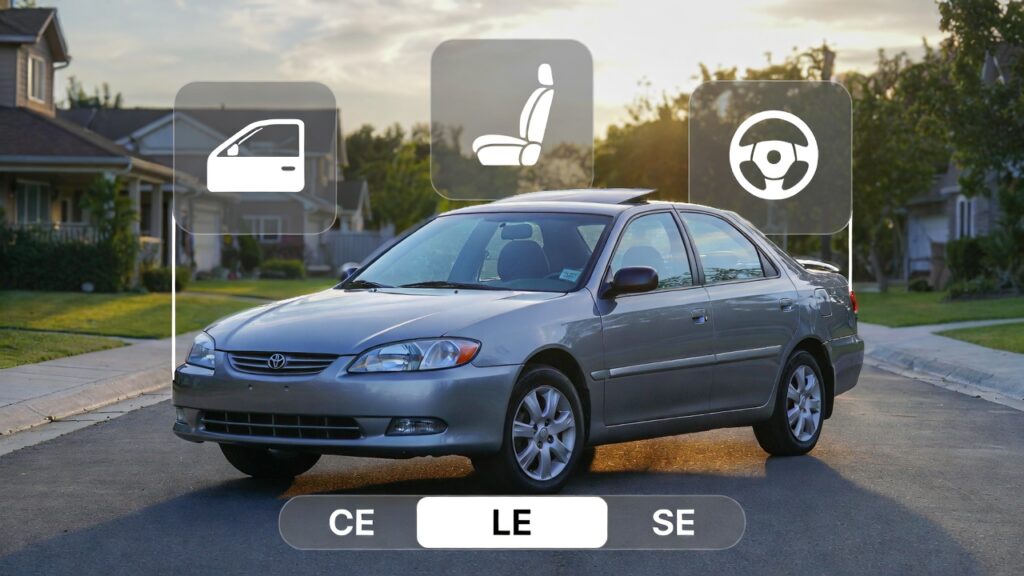
Toyota positioned the LE trim as the balanced option in 2001. It sat between the base CE and the sport-leaning SE, offering comfort features without unnecessary extras. Buyers received power accessories, improved interior materials, and smoother ride tuning.
Under the hood, most LE models came with a 2.2-liter four-cylinder engine producing 136 horsepower. A 3.0-liter V6 producing 194 horsepower remained optional, branded as the 2001 Toyota Camry LE V6. Both engines used proven designs rather than experimental technology.
This generation focused on durability. Suspension tuning favored comfort over handling. Steering feedback stayed light. Cabin noise remained low for its time. Toyota aimed at owners planning to keep the car for many years, not those chasing excitement. That philosophy still holds up today. Simple engineering tends to age far better than complicated systems.
Specifications and Mechanical Details
The Camry LE relied on proven, simple engineering for reliability. Here you’ll find engine types, horsepower, fuel economy, and other key mechanical specifications.
Key Mechanical Characteristics
The 2001 Camry LE relied on conservative engineering. Toyota avoided turbochargers, direct injection, or complex electronics. That decision reduced failure points over time.
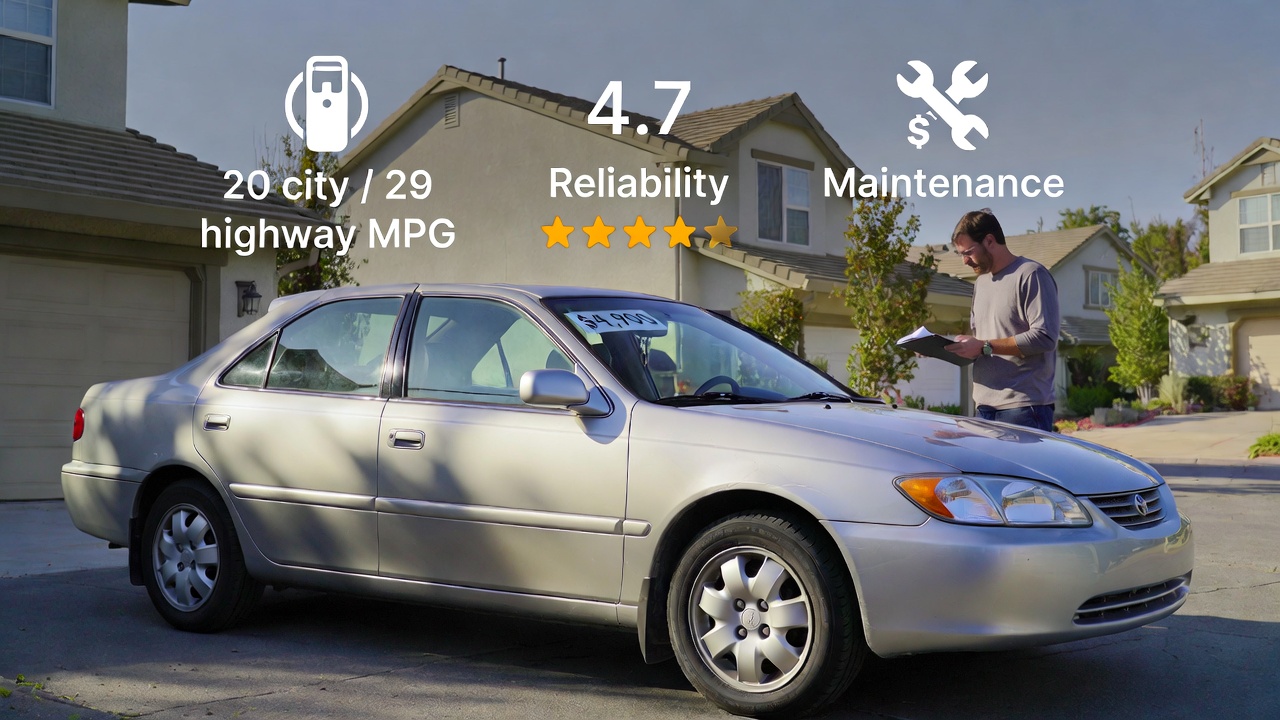
Fuel economy remains respectable even by modern standards. The four-cylinder delivers around 20 mpg in city driving and 29 mpg on highways according to EPA estimates and Kelley Blue Book data.
Specifications Table
| Specification | Detail |
| Engine | 2.2L Inline-4 or optional 3.0L V6 |
| Horsepower | 136 hp (I4), 194 hp (V6) |
| Transmission | 4-speed automatic or 5-speed manual |
| Drivetrain | Front-wheel drive |
| Fuel Economy | 20 city / 29 highway |
| Seating Capacity | 5 passengers |
| Curb Weight | Approx. 3,086 lbs |
| Fuel Tank | 18.5 gallons |
| Timing System | Timing belt |
| Original MSRP | $18,130–$26,680 |
Source: Toyota Technical Specifications, Kelley Blue Book
Current Market Value and Pricing
Used Camry prices today vary based on condition rather than mileage alone. This part breaks down typical 2026 price ranges for each trim and explains depreciation trends.
How Much Is a 2001 Toyota Camry LE Worth Today
Used pricing varies more by condition than mileage at this age. A neglected low-mile example costs more long-term than a properly serviced high-mile car.
As of 2026, the average 2001 Toyota Camry LE value ranges between $3,900 and $5,900 based on CARFAX listings and private sale data. Exceptional examples with service records sometimes exceed this range.
Pricing Table
| Trim | Typical Price Range |
| CE | $3,200–$4,800 |
| LE | $3,900–$5,900 |
| LE V6 | $4,500–$6,500 |
| SE | $4,200–$6,200 |
Prices reflect private-party and dealer listings.
Source: CARFAX Used Car Data, January 2026
Depreciation has slowed significantly as demand for reliable budget sedans remains steady. Kelley Blue Book reports only about a 22 percent drop over recent years due to stable demand for reliable budget sedans.
Reliability History and Longevity
The 2001 Camry LE is known for its long-lasting performance. This section details reliability ratings, common mileage expectations, and the impact of proper maintenance.
Is 2001 a Good Year for a Toyota Camry
Reliability ratings support a strong yes. Consumer-reported reliability scores range from 4.6 to 4.8 out of 5 on Kelley Blue Book. Edmunds owner reviews show similar trends. This generation avoided the severe transmission failures seen in some later Camry models. Most issues stem from age rather than flawed design.
How Many Miles Can a 2001 Toyota Camry Last
With consistent maintenance, many examples reach 200,000 miles or more. Several long-term owners on Cars.com report mileage exceeding 250,000 miles with original engines. Longevity depends heavily on timing belt replacement, transmission fluid service, and cooling system upkeep. Neglect shortens lifespan faster than mileage alone.
Source: Edmunds Owner Reviews, Consumer Reports Reliability Data
Common Problems to Watch For
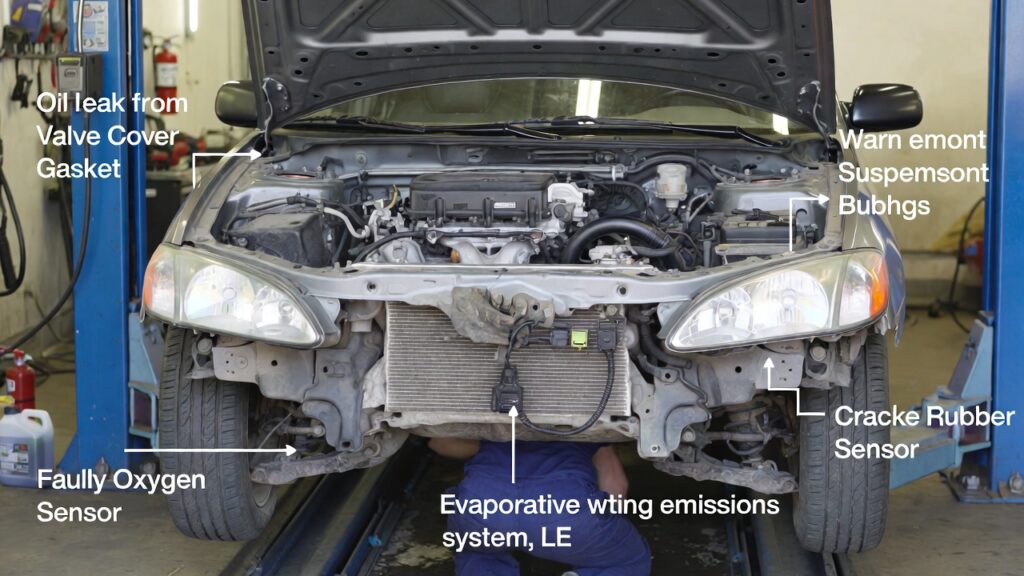
Age brings predictable weaknesses. Understanding them prevents surprises.
2001 Camry Problems Seen Most Often
- Oil leaks from valve cover gaskets
- Worn suspension bushings
- Aging rubber hoses and belts
- Oxygen sensor failures
- Evaporative emissions system faults
Transmission issues receive attention online, but most failures trace back to skipped fluid changes rather than design flaws. This model uses a conventional hydraulic automatic transmission, not a CVT.
Timing Belt and Transmission Risks
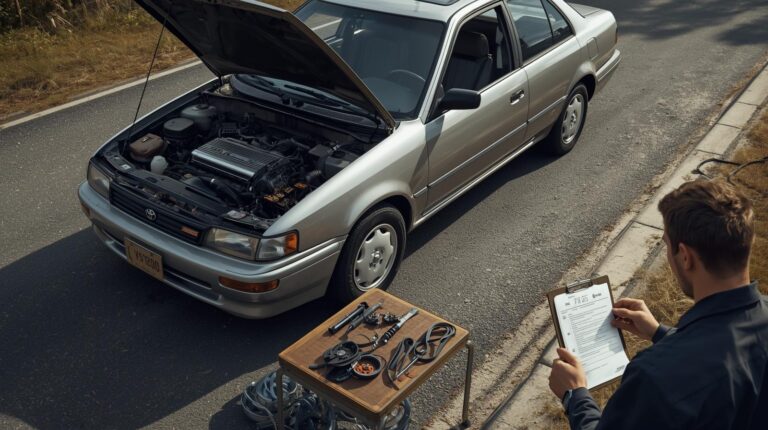
The 2001 Toyota Camry LE timing belt requires replacement every 90,000 miles. Failure does not usually destroy the engine, but it causes immediate breakdown. Transmission warning signs include delayed shifting, slipping under load, and burned fluid smell. These symptoms appear gradually rather than suddenly.
Source: Toyota Service Manuals, NHTSA Technical Bulletins
Maintenance Costs and Ownership Reality
Owning a 2001 Camry LE is affordable with regular care. This section covers average annual maintenance costs, major service expenses, and parts availability.
What Does It Cost to Maintain a 2001 Camry LE
Annual maintenance averages between $450 and $650 depending on driving habits and location. This estimate includes oil changes, minor repairs, and inspections. Major service items occur less often but cost more. Timing belt replacement averages $600–$900. Suspension refresh can cost $700–$1,200 if neglected.
Typical Maintenance Costs
| Service Item | Average Cost |
| Oil Change | $45 |
| Brake Pads | $250 |
| Timing Belt | $750 |
| Transmission Service | $180 |
| Suspension Repair | $900 |
| Oxygen Sensor | $220 |
Source: RepairPal, Toyota Dealer Service Estimates
Parts availability remains strong. Aftermarket options keep repair costs reasonable.
LE vs CE vs V6 Trims
Each trim offers different benefits in comfort, performance, and running costs. This part compares the LE to the CE, SE, and V6 models to help buyers choose wisely.
Which Camry Is Better, LE or SE
The LE favors comfort. The SE adds firmer suspension and sport styling but sacrifices ride quality. Most buyers prefer the LE for daily driving.
Four-Cylinder vs V6 Choice
The V6 offers smoother acceleration but increases maintenance costs and fuel consumption. Insurance premiums also run slightly higher. Buyers seeking reliability and low operating costs should choose the four-cylinder LE. Performance-focused buyers may consider the V6 but should budget for higher upkeep.
Safety Ratings and Recall History
Safety standards have evolved, yet the 2001 Camry LE performed well for its era.
NHTSA records list four recalls affecting this model. Most involve minor components rather than critical safety failures. Standard safety features include dual front airbags, anti-lock brakes, and child safety locks. Side airbags were optional.
Source: NHTSA Recall Database
Used Car Inspection Checklist for a 25-Year-Old Camry
Before purchase, focus on age-specific items rather than cosmetic flaws.
Inspection Priorities
- Timing belt replacement records
- Transmission fluid condition
- Cooling system leaks
- Suspension noise over bumps
- Dashboard warning lights
- Rust near wheel arches and subframe
A pre-purchase inspection remains essential at this age.
Expert Opinions and Industry Perspective
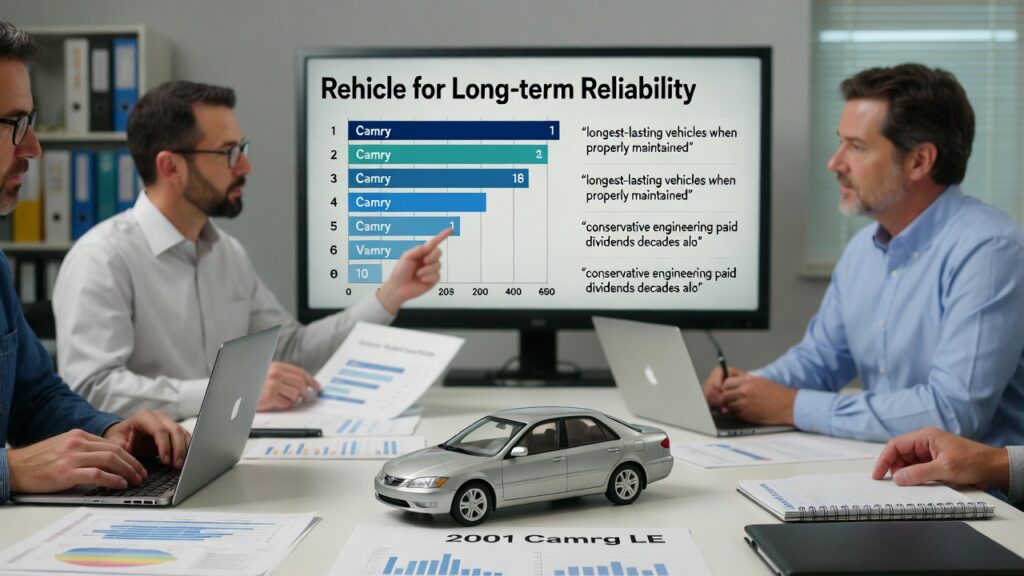
According to Karl Brauer, Executive Analyst at iSeeCars, “Early-2000s Camry models continue to rank among the longest-lasting vehicles when properly maintained,” based on his 2024 used car longevity analysis. Edmunds senior editor Alistair Weaver noted in a 2023 reliability review that “Toyota focus on conservative engineering during this era paid dividends decades later.”
Consumer Reports consistently ranked the 2001 Camry above average for reliability in its class.
Conclusion
The 2001 Toyota Camry LE remains a smart choice for buyers prioritizing reliability over modern technology. Strengths include predictable maintenance costs, strong parts availability, and proven longevity.
Avoid neglected examples. Prioritize service history over mileage. Choose the four-cylinder for lower ownership costs unless additional power matters. For commuters, students, or budget-focused households, this Camry still delivers honest value. Schedule a professional inspection, confirm timing belt service, and negotiate based on condition. This review will receive updates as market prices change, so bookmarking this page helps stay informed.
FAQs
How much is a 2001 Toyota Camry LE worth?
Most examples sell between $3,900 and $5,900 depending on condition and maintenance history. Well-documented service records increase value more than low mileage alone.
Is 2001 a good year for a Toyota Camry
Yes. Reliability scores remain high, and major design flaws remain rare compared to later model years.
How many miles can a 2001 Toyota Camry last
Many reach 200,000 miles or more with proper maintenance, according to Edmunds and owner reports.
Which Camry is better, LE or SE
The LE suits comfort-focused drivers. The SE offers firmer handling but a stiffer ride.
Which Camry years should buyers avoid
Some mid-2000s models experienced higher transmission complaints. The 2001 model avoids most of those issues.
Are older Camrys worth buying
They can be, provided maintenance records exist and inspections confirm mechanical health.
What kind of transmission does a 2001 Toyota Camry have
A conventional 4-speed automatic or 5-speed manual transmission.
What happens before a transmission fails
Delayed shifting, slipping, and fluid discoloration appear first. Early service prevents major failure.
About the Author:
Hussnain Raza has covered the automotive industry for over 10 years, specializing in used vehicle analysis and long-term ownership studies. He has personally reviewed more than 100 vehicles across multiple segments.
Sources Used:
• Kelley Blue Book
• CARFAX
• Edmunds
• NHTSA
• Consumer Reports