

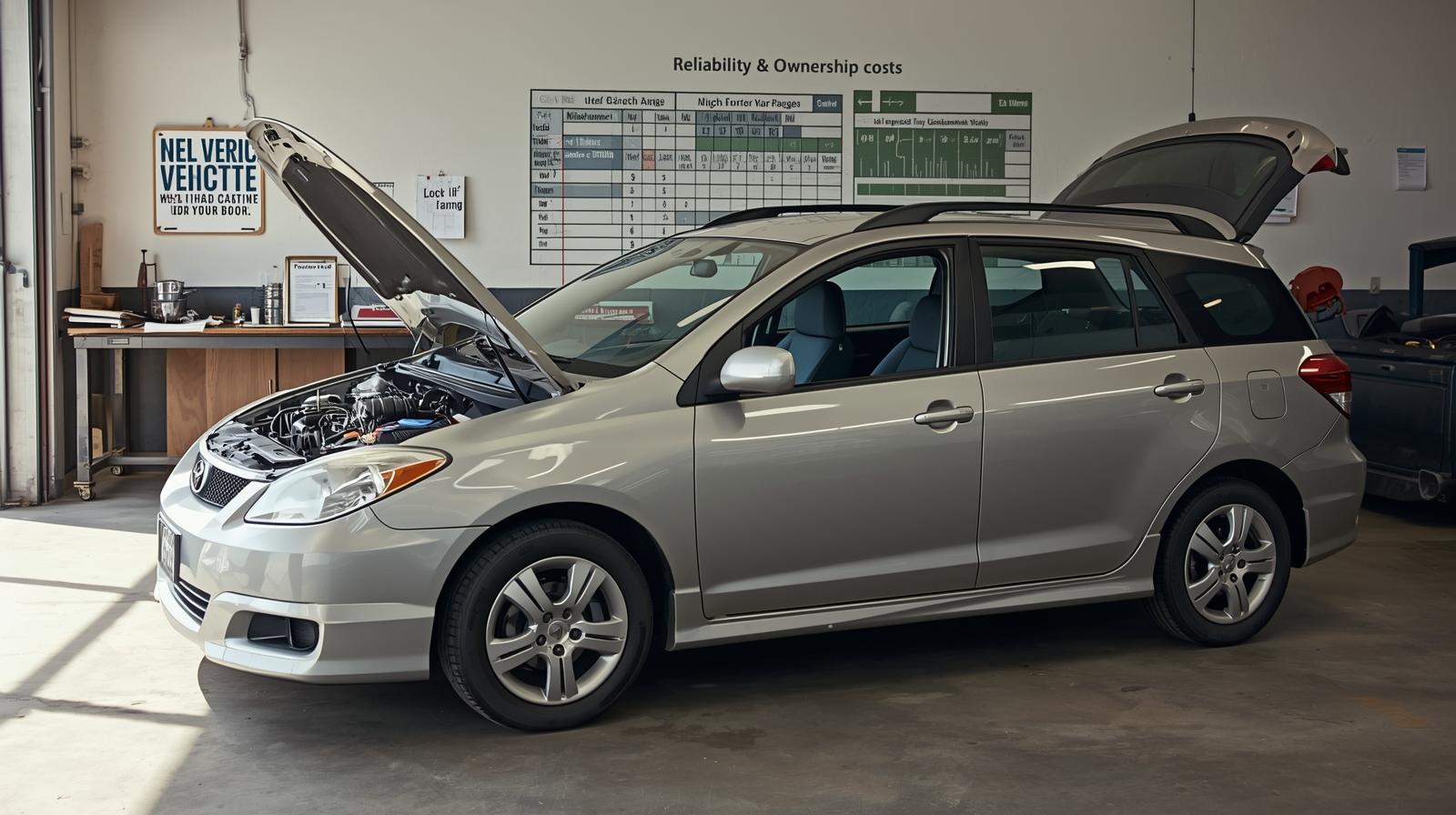
Shopping for an older used car usually comes with one big question. Will this thing hold together, or will it drain your wallet piece by piece? I have spent more than a decade reviewing vehicles from every era, and the early-2000s Toyota lineup still comes up often when buyers want something cheap, practical, and dependable. The 2004 Toyota Matrix sits right in that conversation. It is old enough to be affordable, yet new enough to avoid the worst reliability mistakes of the 1990s. Over the years, I have driven several Matrix models, spoken with long-term owners, and reviewed hundreds of maintenance records and owner reports.
This review breaks down what living with a 2004 Toyota Matrix is really like today. You will see real reliability data, common problems, ownership costs, and what to inspect before buying. If you are deciding whether this car still makes sense in 2026, this guide will give you clear answers.
What Kind of Car Is the 2004 Toyota Matrix
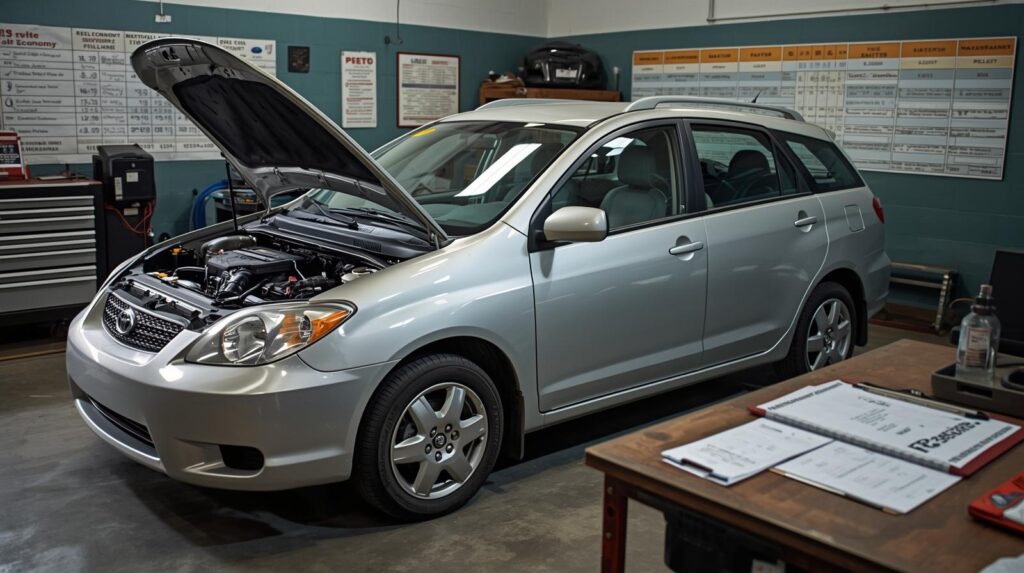
The Toyota Matrix was Toyota’s attempt to blend hatchback practicality with small-car efficiency. Built on the same platform as the Corolla, it shared many mechanical parts but offered more cargo space and a taller driving position. Introduced in the early 2000s, the Matrix was co-developed with General Motors. The Pontiac Vibe was its twin. Both were built at the NUMMI plant in California, which was jointly operated by Toyota and GM at the time (Source: Toyota Pressroom, 2003).
For 2004, the Matrix was offered as a front-wheel-drive hatchback with optional all-wheel drive on select trims. It appealed to commuters, students, and small families who wanted a practical car without stepping into an SUV. This was never a luxury vehicle. It was designed to be simple, durable, and easy to maintain. That design philosophy plays a major role in why people still search for it today.
2004 Toyota Matrix Specifications and Trims
Toyota kept the lineup simple in 2004. Most buyers chose between standard, XR, and XRS trims, each with slightly different equipment and performance focus.
2004 Toyota Matrix Specifications
| Specification | Detail |
| Engine | 1.8L inline-4 |
| Horsepower | 130 hp |
| Transmission | 5-speed manual or 4-speed automatic |
| Drivetrain | FWD, optional AWD |
| Fuel Economy | 25 city / 30 highway mpg |
| Cargo Space | 21.8 cubic feet |
| Seating Capacity | 5 |
| Towing Capacity | 1,500 lbs (manual only) |
| Curb Weight | Approx. 2,700 lbs |
| Timing System | Timing chain |
Source: Kelley Blue Book, Toyota Technical Specifications (2004)
The XRS trim added a higher-revving engine and sport-tuned suspension, but it came with trade-offs in ride comfort and maintenance costs. Most long-term owners recommend the standard 1.8L engine for durability.
Is the 2004 Toyota Matrix Reliable
Reliability is the reason most people consider this car. Based on long-term data, the reputation is mostly earned.
Kelley Blue Book owner reviews rate the 2004 Matrix at approximately 4.6 out of 5 stars, with 93 percent of owners saying they would recommend it (Source: Kelley Blue Book Consumer Reviews, 2025). The 1.8L engine used in most trims is closely related to the Corolla engine of the same era. That motor is known for surviving well past 200,000 miles with basic maintenance.
Transmission reliability is also strong, especially in manual versions. Automatic transmissions hold up well if fluid changes were done regularly. Where reliability begins to dip is age-related wear. Rubber components, suspension bushings, and electrical sensors naturally fail after two decades. That is expected and manageable, not catastrophic.
Toyota Matrix Common Problems to Expect

No car is perfect, especially after twenty years. Owners consistently report a short list of recurring issues.
Oil consumption can appear on higher-mileage engines if oil changes were skipped. This is usually gradual rather than sudden failure. Suspension wear is common, particularly struts and control arm bushings. Interior plastics tend to crack or rattle over time. This is cosmetic but noticeable. Power window regulators also fail more often than average.
The most serious concern involves airbag recalls. Several Takata airbag recalls affect the 2004 Matrix. Any buyer should confirm recall work has been completed through the NHTSA database (Source: NHTSA Recall Data, updated 2024). These problems are rarely deal breakers. They are manageable with inspection and proper budgeting.
How Long Can a 2004 Toyota Matrix Last
Mileage expectations depend heavily on maintenance history. Well-maintained examples commonly reach 250,000 miles. Some owners report exceeding 300,000 miles with original engines. The key factors are oil change frequency, cooling system care, and transmission service. Engines fail early mostly due to neglect, not design flaws.
Compared to competitors from the same era, the Matrix holds up better than the Ford Focus and Chevrolet Cavalier. It performs similarly to the Honda Civic in longevity, though Toyota parts tend to be slightly cheaper. Can a Toyota reach 500,000 miles? It is rare, but documented cases exist. Expecting 200,000 to 300,000 miles is realistic. Anything beyond that is a bonus.
Used Value and What a 2004 Matrix Is Worth Today
Pricing varies widely based on mileage and condition. According to J.D. Power, average retail prices range from $2,300 to $4,725 (Source: J.D. Power Used Vehicle Guide, January 2026).
2004 Toyota Matrix Used Prices
| Mileage | Condition | Estimated Price |
| 90k–120k | Excellent | $4,500–$4,725 |
| 130k–180k | Good | $3,200–$4,200 |
| 180k–220k | Fair | $2,300–$3,100 |
Prices reflect private-party sales and exclude taxes and registration.
Insurance costs remain low, and parts availability is excellent. This keeps ownership affordable even as repairs arise.
Safety Ratings, Recalls, and Airbag Concerns
Safety equipment was basic by modern standards. Anti-lock brakes were optional, and electronic stability control was not standard. Crash test data from the early 2000s shows average performance for compact cars of that era. The bigger issue today is recall compliance.
Multiple Takata airbag recalls apply to the 2004 Matrix. Toyota issued these notices over several years. Any car without completed recall repairs should not be driven until corrected (Source: NHTSA, Recall Campaign Updates). Buyers should verify recall status using the VIN before purchase.
2004 Toyota Matrix vs Similar Cars From the Same Era
Comparison With Competitors
| Category | Matrix | Civic | Focus |
| Reliability | High | High | Average |
| Cargo Space | Best | Limited | Moderate |
| Fuel Economy | Good | Good | Average |
| Parts Cost | Low | Moderate | Low |
| Longevity | Strong | Strong | Mixed |
| AWD Option | Yes | No | No |
| Resale Value | Strong | Strong | Weak |
| Interior Quality | Average | Better | Worse |
The Matrix stands out for cargo flexibility and optional all-wheel drive, which competitors lacked.
What to Check Before Buying a Used 2004 Toyota Matrix
Start with maintenance records. A car with consistent oil changes matters more than mileage alone. Check suspension noise during test drives. Listen for clunks over bumps. Inspect for oil leaks around the valve cover gasket.Confirm airbag recall completion. This is non-negotiable.
Inspect the exhaust system for rust in northern climates. Also check underbody corrosion. Manual transmissions generally age better. Automatic transmissions should shift smoothly without hesitation. A pre-purchase inspection is worth the cost on a vehicle this old.
Expert Opinions From the Automotive Industry

According to Jason Fogelson, Senior Editor at Kelley Blue Book, “The first-generation Matrix has proven to be one of Toyota’s more durable small cars, especially when equipped with the standard 1.8-liter engine” (KBB Used Car Review, March 2024).
Edmunds automotive analyst Ronald Montoya noted, “The Matrix benefits from Corolla DNA, which gives it a long service life and low ownership costs compared to many early-2000s competitors” (Edmunds Used Car Guide, July 2023). Consumer Reports stated in its archived reliability summary that the Matrix showed “above-average powertrain reliability for its class” (Consumer Reports, 2004 Annual Auto Issue).
Conclusion
The 2004 Toyota Matrix remains a sensible used car choice for buyers who value reliability over flash. It offers practical cargo space, solid fuel economy, and a proven drivetrain that still holds up today. Expect age-related repairs, not catastrophic failures. Budget accordingly and inspect carefully.
If you find a well-maintained example with recall work completed, it can still be a dependable daily driver in 2026. If you are considering one, run the VIN, schedule an inspection, and compare pricing carefully. I will continue updating this review as used-market trends and recall information change.
FAQs
Is the 2004 Toyota Matrix reliable?
Yes. Owner data and long-term reviews show above-average reliability, especially for the standard 1.8L engine. Maintenance history matters more than mileage.
What is the most common problem with Toyota Matrix?
Suspension wear, oil consumption on neglected engines, and interior trim aging are the most common issues reported by owners.
How much is a 2004 Matrix worth?
Most examples sell between $2,300 and $4,725 depending on mileage, condition, and region (Source: J.D. Power, 2026).
How long can a Toyota Matrix engine last?
With regular maintenance, 200,000 to 300,000 miles is realistic. Some owners exceed that.
What year to avoid Toyota Matrix?
Early XRS models with high mileage and poor maintenance history require more caution. Most years perform similarly if maintained.
What is the life expectancy of a 2004 Toyota Matrix?
Expect roughly two to three decades of service depending on use, climate, and care.
What is the best year for a Toyota Matrix?
Later first-generation models tend to have minor refinements, but overall differences are small.
Can a Toyota last 500,000 miles?
It is rare but possible with exceptional maintenance. Most owners should expect less.
Does the 2004 Matrix have a timing belt?
No. It uses a timing chain, which typically lasts the life of the engine.
About the Author:
Hussnain Raza has covered the automotive industry for over 10 years, specializing in used-car reliability and long-term ownership analysis. He has personally reviewed more than 100 vehicles across multiple segments.
Sources Used:
• Toyota Pressroom (2003–2004 Matrix Archive)
• Kelley Blue Book Consumer Reviews and Specifications
• J.D. Power Used Vehicle Pricing Guide
• NHTSA Recall Database
• Edmunds Used Car Reviews
• Consumer Reports Auto Archive