

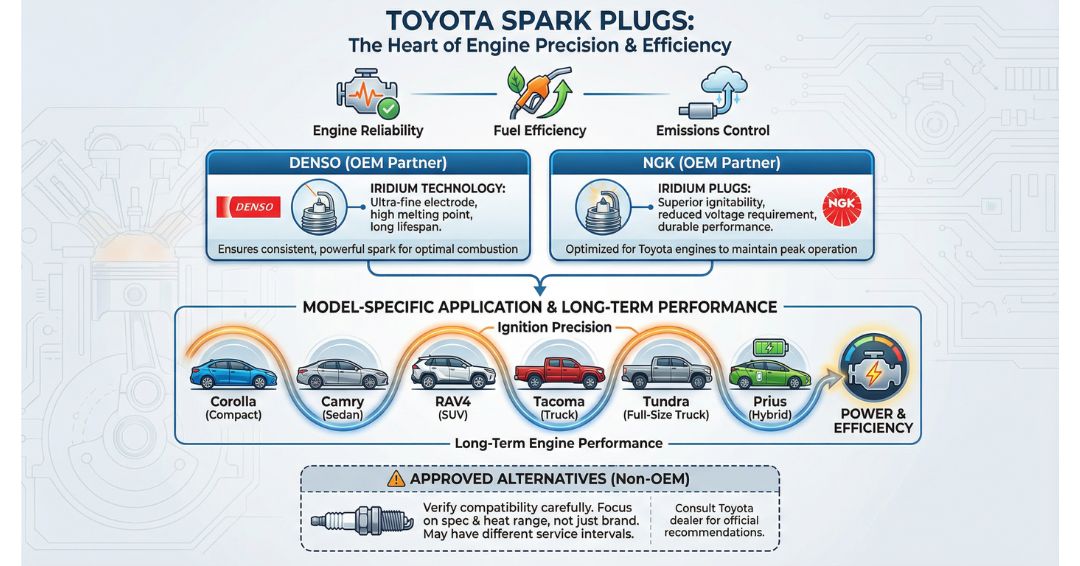
Toyota engines are known for quiet operation and long life even after many years of daily use. A major reason behind this is how carefully Toyota selects ignition parts. Spark plugs are not treated as ordinary components. They are chosen with specific attention to combustion behavior emissions control and durability needs so the engine can stay stable for a long time
Understanding what Toyota installs from the factory, and why, removes much of the confusion seen in forums and parts stores.
Quick Answer for 2025 Readers
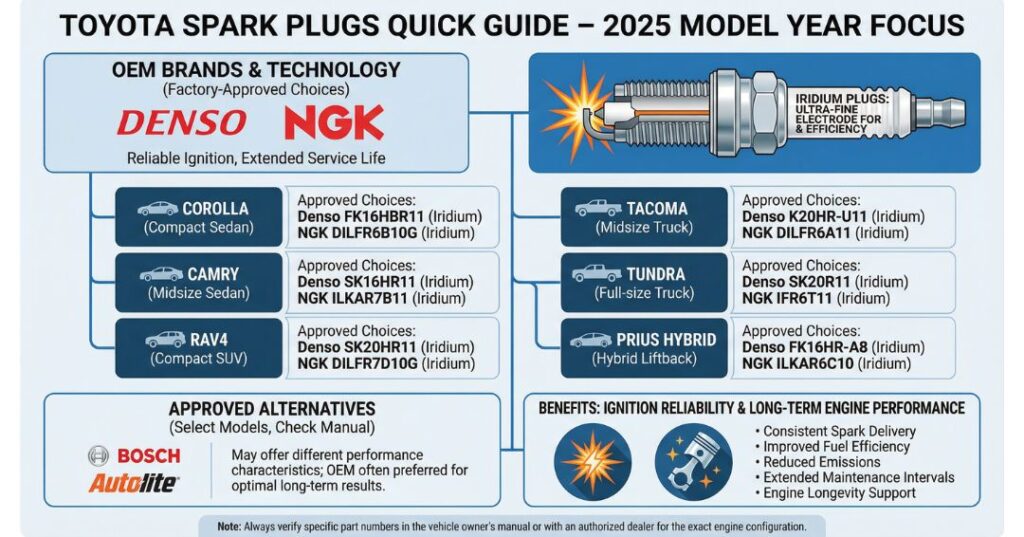
Toyota uses Denso and NGK spark plugs in most gasoline and hybrid engines. New Toyota vehicles usually come with iridium spark plugs from the factory since they support precise ignition and long service life. The choice is based on engineering standards instead of marketing deals. There is also a clear difference between factory installed plugs and approved replacement options. A plug can still work properly if it matches the required specifications even if it was not installed at the factory.
Why Spark Plug Choice Matters in Toyota Engines
Spark plugs do much more than help an engine start. In Toyota cars they directly affect fuel use idle smoothness emissions and engine health over time. When the correct plug is installed combustion stays stable even when weather or driving conditions change. When the wrong plug is used the engine may still run but small issues start to appear. Fuel usage can go down first then idle may feel rough. After some time misfires can damage ignition parts and catalytic systems. Toyota engines need very precise combustion control so even small changes can affect performance
Toyota Engine Design Philosophy and Ignition Precision
Modern Toyota engines rely on controlled ignition timing and predictable flame travel. The company prioritizes longevity over aggressive performance tuning. That is why plug material and heat range matter more than brand preference.
Iridium tips need less voltage to create a spark. This helps reduce pressure on ignition coils and keeps starting more consistent during cold weather or heavy driving. Toyota designs engines based on these qualities instead of following aftermarket modifications or trends.
OEM Spark Plug Brands Toyota Uses From Factory
Toyota does not treat spark plugs as interchangeable parts. The brands chosen for factory installation follow strict internal testing and long-term durability targets.
Denso Spark Plugs: Toyota’s Primary OEM Partner
Denso is part of the Toyota group which is why many Toyota engines come with Denso spark plugs from the factory. These plugs are not general use parts. They are often designed for specific Toyota engine families. Denso iridium plugs are known for good heat control and slow wear on the electrode. In real driving conditions they continue to work smoothly even after many miles. This reliability is one reason Toyota suggests long replacement intervals.
NGK Spark Plugs: Secondary OEM and Approved Alternative
NGK is also approved by Toyota and, in some regions, installed at the factory depending on supply and engine configuration. NGK Laser Iridium plugs are the most common equivalents.
NGK focuses on ignition efficiency and strong spark formation. The design philosophy differs slightly from Denso, but performance outcomes are similar when specifications match. Toyota approval depends on fitment accuracy, not brand loyalty.
Types of Spark Plugs Toyota Uses
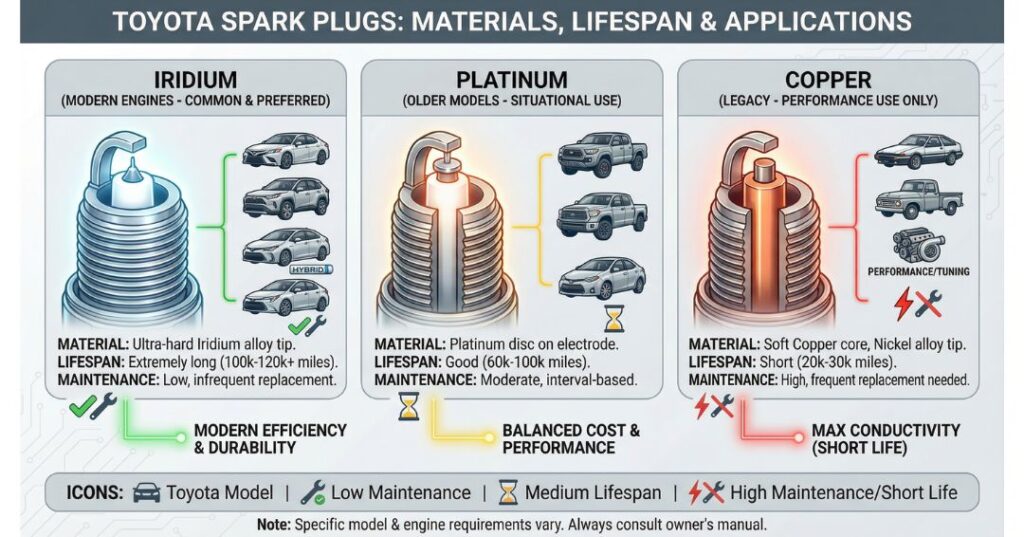
Not all spark plugs behave the same, even if they physically fit. Toyota selects plug materials based on wear patterns, heat resistance, and maintenance expectations.
Iridium Spark Plugs (Most Common)
Iridium spark plugs are used in most modern Toyota engines. The material resists wear and keeps a sharp firing edge for a long period. This helps maintain stable combustion and consistent performance over many years. Toyota prefers iridium because it lowers maintenance needs and helps meet emissions standards while still keeping smooth driving performance
Platinum Spark Plugs (Older Models)
Some older Toyota engines used platinum spark plugs, especially before iridium became cost-effective for mass production. Platinum performs well but wears faster. These plugs are still acceptable where specified, but they are not interchangeable with iridium without checking engine requirements.
Copper Spark Plugs (Rare and Situational)
Copper spark plugs conduct electricity well but wear quickly. Toyota avoids them for factory use because frequent replacement contradicts the brand’s low-maintenance philosophy. Copper plugs only make sense in heavily modified engines or short-interval performance applications, not in stock daily-driven vehicles.
Toyota Spark Plug Specifications Explained (Simply)
Specifications often confuse owners more than brand names. Understanding these basics explains why Toyota discourages experimentation with ignition components.
Heat Range
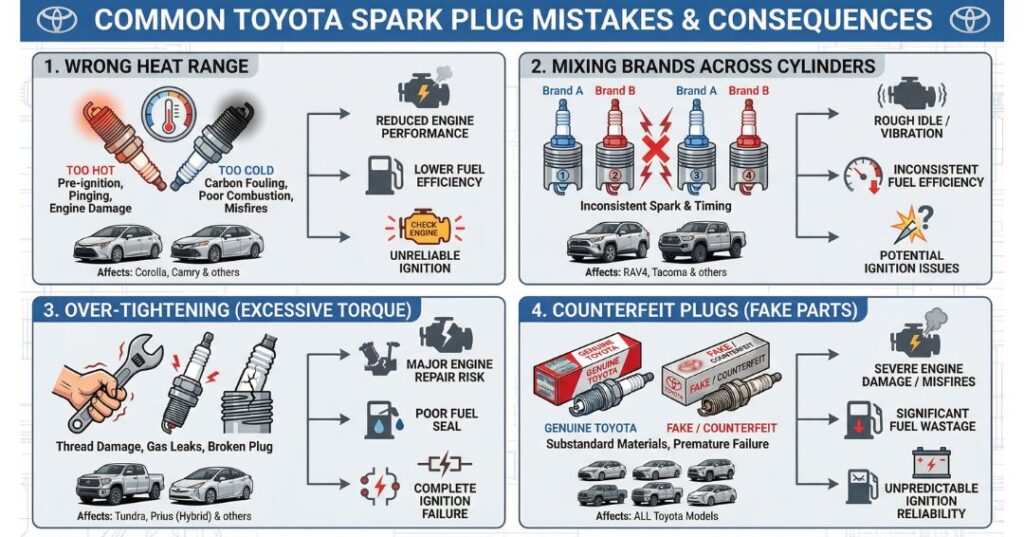
Heat range controls how quickly a spark plug transfers heat away from the combustion chamber. Toyota engines require precise heat balance. A plug that runs too hot risks pre-ignition. A plug that runs too cold can foul and misfire.
This is why Toyota specifies exact heat ranges rather than ranges of acceptability.
Thread Size, Reach, and Seat Type
Incorrect thread length or seat type can cause poor sealing or physical damage to the cylinder head. These mistakes are common when owners choose plugs based on brand alone. Toyota designs cylinder heads with specific thread engagement depths. Deviating from that design causes long-term wear.
Spark Plug Gap
Most Toyota iridium plugs come pre-gapped. Adjusting the gap manually can crack the fine iridium tip or distort the electrode shape. Unless Toyota specifies otherwise, the factory gap should remain untouched.
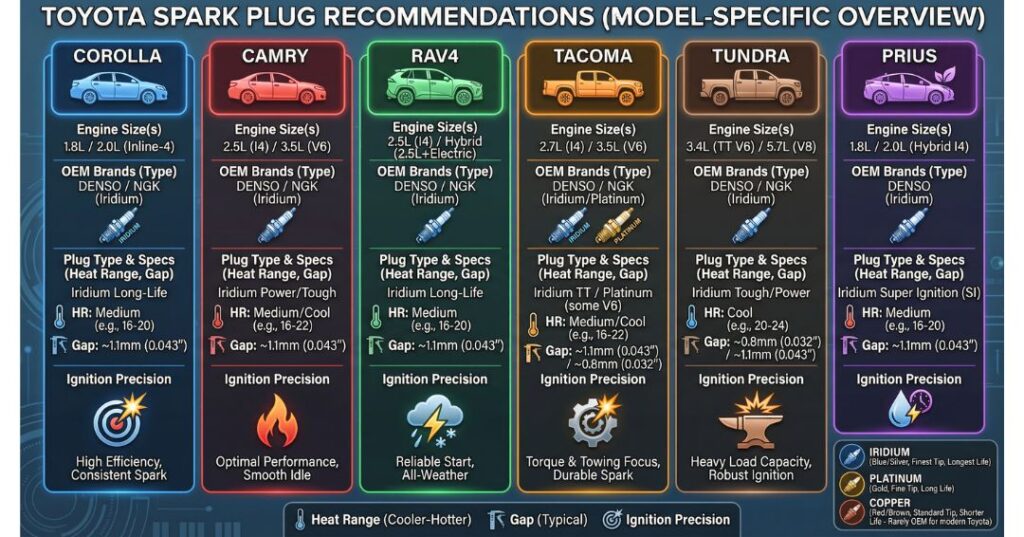
Model-Specific Toyota Spark Plug Recommendations
Different Toyota models place different demands on ignition systems. Engine size, compression, and driving purpose all influence plug selection.
Toyota Corolla
Designed for efficiency and daily reliability. Iridium plugs with exact heat range matching are essential to maintain smooth idle and fuel economy.
Toyota Camry
Higher compression engines make heat control more critical. OEM-spec iridium plugs help prevent knock and uneven combustion.
Toyota RAV4
Engine configurations vary by year and drivetrain. Hybrid variants require especially precise ignition behavior.
Toyota Tacoma
Truck engines operate under load more often. OEM plugs handle sustained heat better than performance alternatives.
Toyota Tundra
Large displacement engines demand plugs that dissipate heat effectively, especially during towing or hauling.
Toyota Prius and Hybrid Models
Hybrid engines cycle on and off frequently. Spark plugs must deliver consistent ignition after repeated cold starts. Deviating from OEM specifications often causes rough restarts.
Denso vs NGK: Which Is Better for Toyota?
The debate exists mostly in forums. In practice, both brands perform well when the correct part number is used. Denso tends to emphasize durability and factory integration. NGK emphasizes ignition efficiency and availability. Toyota approves both because performance outcomes remain consistent when specifications are respected.
The specification matters more than the logo.
Can You Use Aftermarket or Performance Spark Plugs in Toyota?
Aftermarket plugs can make sense in modified engines with altered compression, forced induction, or tuning changes. For stock engines, they offer little benefit and sometimes introduce problems.
Using non-approved plugs may also complicate warranty claims if engine damage occurs.
How Often Should Toyota Spark Plugs Be Replaced?
Iridium spark plugs often last between 80,000 and 100,000 miles under normal driving. Platinum plugs require earlier replacement. Short trips, heavy loads, dusty environments, and extreme temperatures shorten lifespan. Real-world conditions matter more than mileage alone.
How to Identify the Correct Spark Plug for Your Toyota
The most reliable way to find the correct spark plug is by checking the owner manual or using a VIN lookup at a dealer or official OEM catalog. Many online stores also sell spark plugs but some of them can be fake even if they look original. Very low prices are often a warning sign that the part may not last long.
Common Spark Plug Mistakes Toyota Owners Make
Using the wrong heat range is the most damaging mistake. Mixing brands across cylinders creates uneven combustion. Over-tightening damages threads. Buying counterfeit plugs leads to early failure and misfires. These mistakes often cost more in repairs than the plugs themselves.
Conlusion
Toyota engines perform best when fitted with OEM-specified iridium spark plugs from Denso or NGK. Brand debates matter less than correct specifications. Following Toyota’s ignition requirements protects fuel efficiency, smoothness, and long-term reliability. Choosing the right spark plug is not about upgrades. It is about respecting how the engine was designed to operate.
FAQs
Does Toyota require Denso spark plugs only?
No. Toyota approves both Denso and NGK when specifications match.
Can NGK replace Denso in Toyota engines?
Yes, if the part number and specifications are identical.
Are iridium spark plugs worth it for Toyota?
Yes. They support long service intervals and stable performance.
Can wrong spark plugs damage a Toyota engine?
Yes. Long-term damage can occur even if symptoms appear mild at first.
Do Toyota hybrids use special spark plugs?
Yes. Hybrid engines require precise ignition behavior and OEM adherence is strongly recommended.